
In this episode
- Terracotta lintels cut to size and levelled on the handmade bathroom vanity, ready for lime plaster and a wooden top
- Why the toilet had to be imported, and why the soil pipe now goes through the wall
- A core drilled hole, a new soil pipe and a temporary seal on the outside wall
- The main bedroom floor cleaned and primed with Mapei Eco Prim Grip Plus
- The kitchen tap and the inward opening window: a question for you, answered at the end of the video
Back in the bathroom at the villa
This week my DIY bathroom renovation in Italy moves on, with the vanity and the toilet soil pipe at my abandoned villa in Sicily. It picks up where I left the bathroom in episode 90, when I built the base of the vanity unit myself rather than pay for one I did not love.
A huge thank you for all the lovely messages after last week. It feels so good to be back, and even better to finally have a kitchen. If you missed it, the whole fitting is in episode 92.
Cutting terracotta lintels for the vanity
The custom vanity is something I have been planning for ages. I could not find a vanity unit I liked, and I could not find a sink I liked either. Every time I did find one, the measurements were different, which is one of the main reasons I ended up building it myself.
This week the vanity gets its terracotta lintels, and this is how it went together:
- Cut the terracotta lintels to size with an angle grinder, outside on the patio.
- Place the first cut pieces on the plastered base of the vanity and set up the laser level.
- Clean the lintels with a sponge.
- Fix the lintels in place across the top of the vanity.
- Level and adjust them with a spirit level and a trowel.
It is not finished yet. Once it is done, the vanity will be fully rendered with lime plaster and finished with a wooden top on the lintels, and the video shows the vision for it with the basin and shelving in place. I have written more about working with lime on old walls in my guide to lime mortar and Sicilian stonework.
Why I had to import a toilet
Before drilling, I explain the problems I have had with this bathroom. I could not find a toilet anywhere in Sicily, or even Italy, with a water tank fed from underneath. All the toilets out here with a cistern on top seem to have the cold water inlet going into the side of the tank, and I personally do not like them. It took me ages to find this one, which I had to get imported, with the water feed coming round the back and up into the bottom of the cistern.
The catch is that all the pipework and drainage had to go in long before this stage. I had to second guess where the soil pipe and the cold water feed would need to be before I had the toilet. In theory I should have bought the toilet first and taken the measurements, but I needed to get on with the drainage and the plumbing. It is the same thing that happened with the vanity and the sink, and why I had to redo that drainage several times. I laid a new soil pipe to the cesspit back in episode 53.
Core drilling through the villa wall for the soil pipe
I positioned the toilet to check the alignment and marked the fixing points through its base. The plan is to drill through the back wall, chase down the back of the wall and connect into the main soil pipe run behind the bathroom, which goes into the cesspit, with a tee. I also brought over a 110 mm air admittance valve to connect onto that main run.
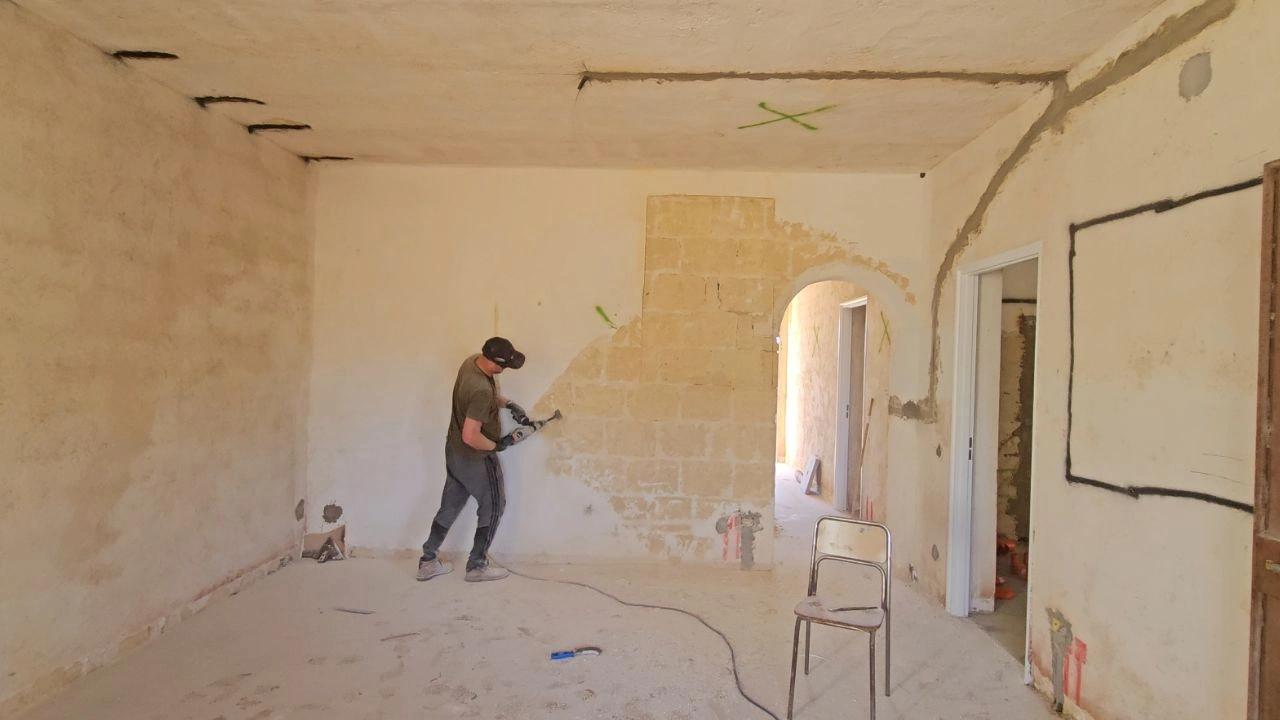
The hole itself went through with a core drill, working from inside the tiled bathroom until it broke through the outside wall. If you have seen episode 50, it is the same kind of job I did for the bathroom extractor fan. Then:
- The soil pipe was pushed through the new hole.
- The end sticking out of the outside wall was cut back with an angle grinder.
- Expanding foam went in around the pipe, then a bead of silicone on the outside.
That seal is only temporary for now. Onwards and upwards.
Priming the main bedroom floor
Next door in the main bedroom, the floor was vacuumed, swept and mopped until it was properly clean. Then it got a coat of Mapei Eco Prim Grip Plus primer, rolled on with a roller on an extension pole. If you are adding up what a project like this really takes, my renovation cost breakdown has the real figures.
The kitchen tap and the window: can you work it out?
A few of you spotted a potential problem after last week: the kitchen tap sits under the window, so how is the window going to open? I can confirm the window does open inwards. It has to, because eventually we will be fitting external shutters to all the windows and French doors.
So here is a little question for you. How do you think I have got around the tap being in the way of the window? Every problem has a solution, and the answer is at the very end of the episode.
Rainwater, the stray cats and the garden
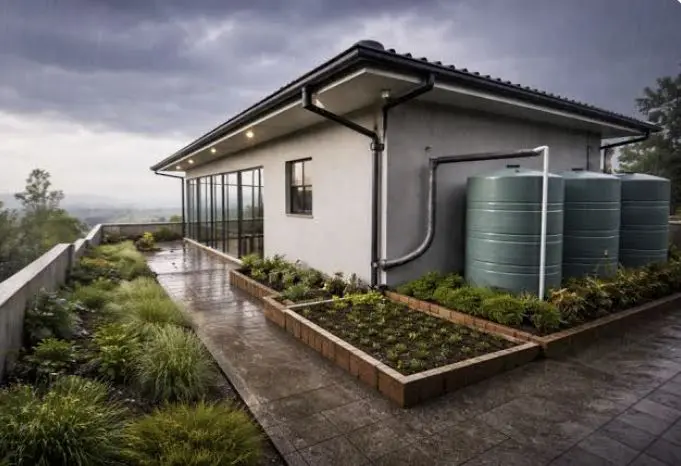
Outside, I pumped stored rainwater from the 2,000 litre tank and later moved water across to the 500 litre tank. The villa collects and stores its own rainwater, and my guide to rainwater harvesting in Sicily covers the tanks, filters and pumps. The stray cats got fed on the patio too.
All the irrigation lines I fitted in the summer have worked fantastically and kept all the fruit trees alive. Now it is going into autumn and winter, it has started raining and the weeds are growing, so I want to keep on top of the mowing and strimming. I disconnected the lines and coiled them up for the winter, ready to set up again next summer.
Taking down the temporary tower door
The last job was the temporary door and door frame on the tower doorway that leads onto the roof terrace. I unscrewed it and took it down, but I plan to keep the wooden posts. The scrap wood went on the pile by the firewood store.
The bathroom is getting closer, one awkward job at a time. If you are planning a project like this yourself, my guide to renovating a house in Sicily covers how I approach each stage.
Frequently asked questions
Why did you import a toilet for the villa bathroom?
I could not find a toilet in Sicily, or anywhere in Italy, with the cold water feed coming up into the bottom of the cistern. The ones I found with a cistern on top seem to feed into the side of the tank, so I had one imported with the feed coming round the back and up from underneath.
What is the bathroom vanity made of?
The base is plastered, and terracotta lintels are cut to size with an angle grinder, then fixed and levelled across it. Once finished, the vanity will be fully rendered with lime plaster and finished with a wooden top.
How does the toilet connect to the cesspit?
A soil pipe goes through a core drilled hole in the back wall and will connect into the main soil pipe run to the cesspit with a tee. A 110 mm air admittance valve will go onto that main run too.
Why do the windows at the villa open inwards?
Because external shutters will eventually be fitted to all the windows and French doors. That is why the kitchen window over the sink has to open inwards past the tap, and the solution is shown at the very end of episode 93.
More episodes on the same job: Water and plumbing
 The weekly YouTube series