
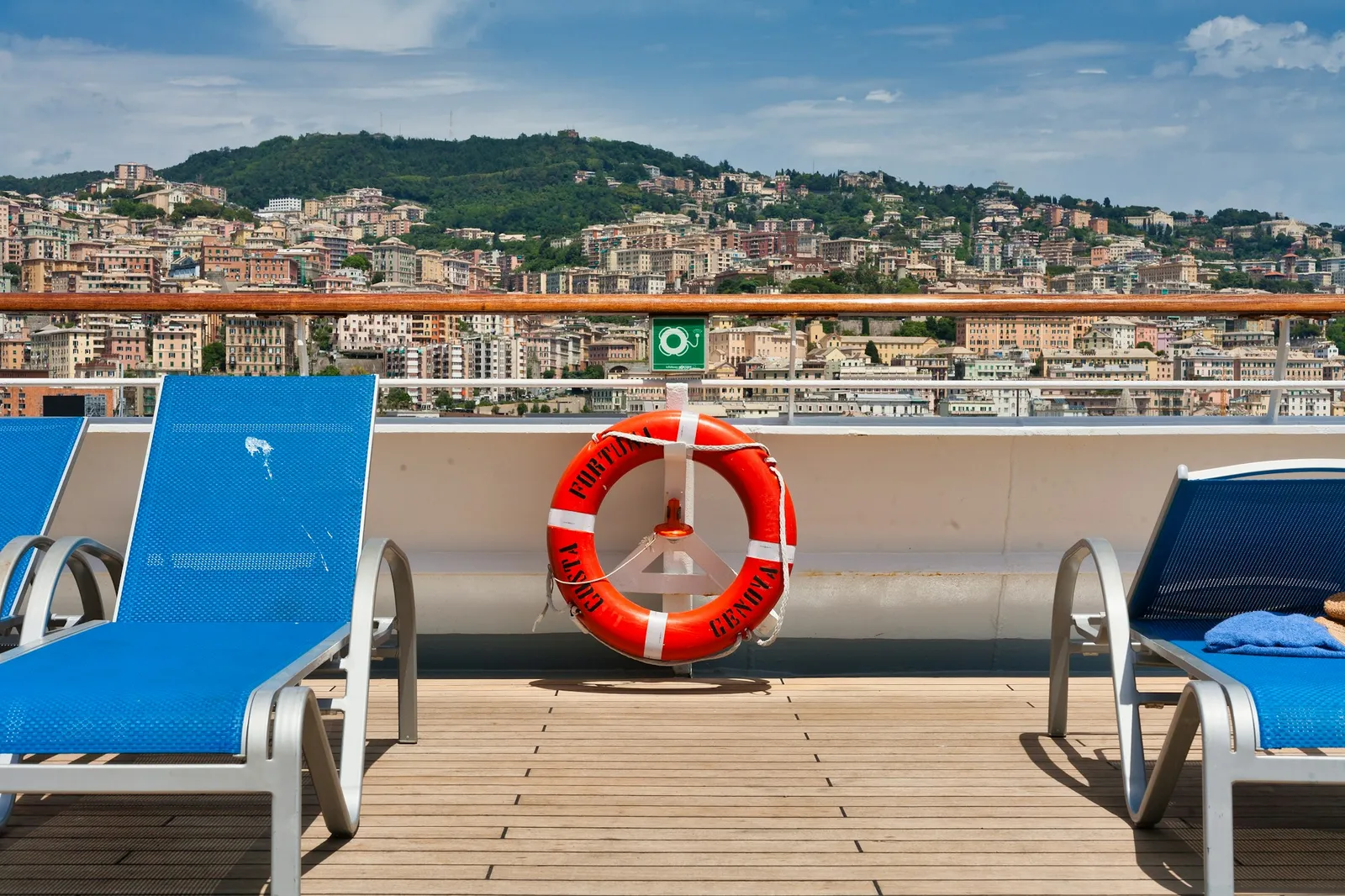
Driving to Sicily from Germany, the Netherlands and the UK: the routes
There are two classic ways over the Alps, and which one suits you depends on where you start.
- The Brenner route, for southern Germany and Austria: from Munich through Innsbruck and over the Brenner Pass on Austria's A13 Brenner motorway, then down through South Tyrol towards Verona and Bologna.
- The Gotthard route, for western Germany, the Netherlands, Belgium and drivers coming off the Channel crossing at Calais: through Basel and the Gotthard road tunnel in Switzerland to Milan, and from there south to Genoa.
Once you are in northern Italy you choose: put the car on a ferry at Genoa, Livorno or Civitavecchia, carry on to the ferries at Naples or Salerno, or drive the whole length of the peninsula to Villa San Giovanni and cross the Strait of Messina. These are the distances and times by road, without stops or traffic:
| From | To the Genoa ferry | To Naples | To Villa San Giovanni (Strait of Messina) |
|---|---|---|---|
| Munich | 629 km (391 miles), about 7 h 10 min | 1,116 km (693 miles), about 11 h 30 min | 1,581 km (982 miles), about 15 h 20 min |
| Frankfurt | 807 km (501 miles), about 8 h 40 min | 1,445 km (898 miles), about 14 h 40 min | 1,909 km (1,186 miles), about 18 h 30 min |
| Cologne | 969 km (602 miles), about 10 h 20 min | 1,606 km (998 miles), about 16 h 10 min | 2,071 km (1,287 miles), about 20 h |
| Amsterdam | 1,231 km (765 miles), about 13 h | 1,869 km (1,161 miles), about 18 h 50 min | 2,333 km (1,450 miles), about 22 h 50 min |
| Brussels | 1,043 km (648 miles), about 11 h 20 min | 1,681 km (1,045 miles), about 17 h 10 min | 2,145 km (1,333 miles), about 21 h 10 min |
| Zurich | 418 km (260 miles), about 5 h | 1,056 km (656 miles), about 10 h 50 min | 1,520 km (944 miles), about 14 h 40 min |
| Vienna | 992 km (616 miles), about 9 h 50 min | 1,320 km (820 miles), about 12 h 50 min | 1,785 km (1,109 miles), about 16 h 40 min |
| Calais | 1,188 km (738 miles), about 11 h 20 min | 1,891 km (1,175 miles), about 18 h | 2,355 km (1,463 miles), about 21 h 50 min |
Real journeys take longer: add fuel and rest stops, holiday traffic on the Alpine passes and around Milan and Bologna, and border queues on busy weekends. Driving all the way from Amsterdam or Calais is two very long days for one driver, or three sensible ones.
Swiss vignette and Austrian tolls on the way
Switzerland: the motorway vignette
Every car on a Swiss motorway needs a vignette. According to the Swiss government's own information page:
- it costs CHF 40, and there is only an annual one: no day, week or month vignettes;
- the 2026 vignette is valid from 1 December 2025 to 31 January 2027;
- the e-vignette is bought online through the federal Via portal (e-vignette.ch) and is linked to your number plate, not to the car; the sticker is sold at filling stations, post offices and customs posts at the border;
- driving without one costs a CHF 200 fine, plus the CHF 40 vignette.
Austria: vignette and the Brenner toll
Austrian motorways need a vignette too. The Austrian government's information service lists these prices for cars in 2026:
| Vignette | Price |
|---|---|
| 1 day (digital only) | €9.60 |
| 10 days | €12.80 |
| 2 months | €32.00 |
| 1 year | €106.80 |
- ASFINAG, the motorway company, says a digital 2 month or annual vignette bought online from its own shop or app is valid only from the 18th day after purchase, because of the consumer right of withdrawal; the 1 day and 10 day vignettes are valid at once, and so is a vignette bought at a sales point;
- the sticker vignette is sold only until 30 November 2026; from 2027 there is only the digital vignette, and a 2026 sticker stays valid until 31 January 2027;
- the whole A13 Brenner motorway, like the Tauern, Karawanken and Arlberg tunnels and two stretches of the A9, has its own section toll instead, and no vignette is needed on those stretches. You pay at the toll station in cash or by card, or buy it online in advance from ASFINAG.
Italian motorway tolls
Italy has no vignette. Most of its motorways are a closed toll system: according to Autostrade per l'Italia, the largest operator, you take a ticket when you join the motorway and pay at the exit for the distance you have driven. A few stretches, such as the A12 from Rome to Civitavecchia, are open systems with a fixed toll at a barrier.
- The toll is a rate per kilometre, which depends on your vehicle class and the terrain: Autostrade gives €0.07869 per km for a car on a flat stretch, so about €7.90 per 100 km, with mountain stretches dearer. The total is rounded to the nearest 10 cents.
- At the exit, blue lanes take cards only: Visa, Mastercard and American Express credit cards, and Maestro and V Pay debit cards, without a PIN. Lanes with a cash symbol take cash and cards.
- Keep out of the yellow lanes marked Telepass: they are for drivers with an Italian electronic toll device.
- If you cannot pay at the exit, the machine gives you an unpaid toll receipt. Pay it within 15 days online, in the Autostrade app or at a Mooney point in a tobacconist or bar and there is no extra charge; after that, fees are added and the police can fine you.
In Sicily itself only some motorways charge tolls. My guide to driving in Sicily covers which ones, and the rules of the road once you arrive.
Genoa to Palermo ferry: the overnight crossing to Sicily
The ferry from Genoa is the reason many Germans, Swiss and Dutch drivers never see southern Italy from the road. GNV sails from Genoa to Palermo, and from Genoa to Termini Imerese, a port east of Palermo. From GNV's own pages:
- the crossing takes about 20 hours 30 minutes, in both directions and to both ports;
- Genoa to Palermo runs all year, with 6 departures a week, 7 in the summer months;
- sailings leave in the evening, usually between 9pm and 11:30pm depending on the season, so you arrive in Sicily the next day;
- you can book a cabin for 2 or 4 people, inside or with a sea view, a suite, a reclining seat or deck passage;
- pets can travel in special cabins, and there is an outdoor area on board for them;
- your car goes into the garage deck: staff put a card with your destination on the windscreen, and you get a tag with the deck number to find it again in Palermo.
What you gain is a night's sleep and the whole length of Italy not driven. What you pay for is the cabin, the car and a day at sea, so compare the fare with the fuel, tolls and hotel you would spend driving south. Check the timetable for your dates on GNV's site before you plan the drive to Genoa around it.
Ferries to Sicily from Livorno, Civitavecchia, Naples and Salerno
Genoa is not the only choice. The further south you board, the shorter the crossing and the longer the drive. These are the routes to Sicily for cars that the three big operators list on their own sites, with the crossing times they give:
| Route | Operator | Crossing |
|---|---|---|
| Genoa to Palermo | GNV | about 20 h 30 min |
| Genoa to Termini Imerese | GNV | about 20 h 30 min |
| Livorno to Palermo | Grimaldi Lines | see Grimaldi’s timetable |
| Civitavecchia to Palermo | GNV | about 13 h 30 min |
| Civitavecchia to Termini Imerese | GNV | about 14 h 15 min |
| Naples to Palermo | GNV, Tirrenia, Grimaldi Lines | about 11 h with GNV; 10 h 30 min to 12 h overnight with Tirrenia |
| Naples to Termini Imerese | GNV | about 9 h |
| Salerno to Palermo | Grimaldi Lines | see Grimaldi’s timetable |
| Salerno to Catania | Grimaldi Lines | see Grimaldi’s timetable |
Grimaldi says its connections with Sicily run all year but does not publish crossing times on its route pages, so check its timetable for your dates. Salerno to Catania is the one route here that lands you on the east coast, for Etna, Taormina and Siracusa. For the Naples crossings, the night train and the last leg from Rome, see my guide to getting to Sicily from Rome and Naples.
Driving all the way: the Strait of Messina
If you drive the full length of Italy, the road ends at Villa San Giovanni, on the tip of Calabria, where Caronte & Tourist car ferries cross to Messina day and night. There is still no bridge; my guide to the Messina Strait bridge explains where that project stands.
The crossing, the fares and the drive down from Naples are all in my guide to getting to Sicily from Rome and Naples, so I will not repeat them here. From Messina, the motorways run west towards Palermo and south towards Catania.
What to carry in your car in Italy
ACI, the Automobile Club d'Italia, lists what foreign drivers must have with them in Italy:
- the vehicle's registration document and proof of insurance;
- a driving licence from an EU or EFTA country, or, with any other licence, an International Driving Permit or a sworn translation of it as well;
- a country sticker if the car is registered outside the EU;
- a warning triangle, placed at least 50 metres behind the car if you break down, where the road allows;
- a high visibility vest, which you must wear outside built up areas if you get out after a breakdown or accident and cannot otherwise be seen from far enough away.
If you drive from the UK
The UK government's guidance on driving in the EU says:
- you can drive in Italy on a UK photocard licence without an International Driving Permit; with an old paper licence you need a photocard or a 1968 permit, which costs £5.50 from shops with PayPoint;
- you need a UK sticker unless your number plate shows the UK identifier with the Union flag;
- you do not need a green card, as UK car insurance gives the minimum third party cover in the EU;
- carry your V5C logbook, or a VE103 certificate if the car is hired or leased.
In winter
Autostrade per l'Italia lists stretches of motorway where winter tyres or chains on board are compulsory, mostly from 15 November to 15 April and on part of the A1 through the Apennines from 1 November; on the A7 into Genoa they are required when it snows. Austria and Switzerland have winter rules of their own, so check them before you cross the Alps between November and April.
Driving or flying and hiring a car: an honest comparison
For a holiday of a week or two, flying is almost always the better deal. The flight from Germany or the UK takes two to three hours, and the time and money you would spend on two days of driving, tolls, vignettes and a ferry cabin go a long way towards a hire car. My guides to Sicily's airports and renting a car in Sicily cover that side.
Driving makes sense when:
- you are coming for months, not weeks, or splitting the year between home and Sicily;
- you are bringing a dog, bikes, tools or more luggage than any airline will take;
- you are moving and want your own car here: read my guides to owning a car in Sicily and shipping your belongings to Sicily first, because a car that stays has rules of its own;
- you enjoy the journey: the Alps, a night in Tuscany or on the coast, and waking up to Palermo from the deck of the ferry.
Frequently asked questions
How long is the ferry from Genoa to Palermo?
About 20 hours 30 minutes with GNV, which sails all year, 6 times a week and every day in the summer months. Ships leave Genoa in the evening, usually between 9pm and 11:30pm, and arrive in Palermo the next day.
Can you drive to Sicily from Germany?
Yes. From Munich it is about 630 km to the ferry in Genoa and about 1,580 km to Villa San Giovanni, where car ferries cross the Strait of Messina. Most drivers take the Brenner or the Gotthard route over the Alps and then either the overnight ferry from Genoa or the motorway south.
Which ferries go to Sicily from northern Italy?
GNV sails from Genoa to Palermo and to Termini Imerese, and Grimaldi Lines from Livorno to Palermo. Further south there are ferries from Civitavecchia, Naples and Salerno.
Do I need a vignette to drive to Sicily?
Not in Italy, where motorways charge by distance. In Switzerland you need the CHF 40 vignette; the 2026 one is valid from 1 December 2025 to 31 January 2027. In Austria you need a vignette, 10 days cost €12.80 in 2026, except on section toll roads such as the Brenner motorway, which has its own toll.
How much are motorway tolls in Italy?
You pay by distance at the exit. Autostrade per l’Italia gives a rate of €0.07869 per km for a car on flat stretches, about €7.90 per 100 km, with mountain stretches dearer. Blue lanes take cards, and yellow Telepass lanes are only for drivers with a toll device.
Is there a ferry to Catania?
Grimaldi Lines lists a route from Salerno to Catania. From further north, most car ferries go to Palermo or Termini Imerese, or you drive to Villa San Giovanni and cross the strait to Messina.
Do I need an International Driving Permit to drive in Italy with a UK licence?
Not with a UK photocard licence, according to the UK government. With an old paper licence you need a photocard or a 1968 International Driving Permit, which costs £5.50 from shops with PayPoint.
What do I need to carry in my car in Italy?
Your licence, the registration document and proof of insurance, a warning triangle and a high visibility vest. Non-EU licences also need an International Driving Permit or a sworn translation, and UK cars need a UK sticker unless the plate shows the UK identifier.
Is it better to drive or fly to Sicily?
For a holiday of a week or two, flying and hiring a car is usually quicker and cheaper. Driving pays off for long stays, when you bring pets or a lot of luggage, or when you are moving to Sicily with your own car.
Sources and small print
- GNV: ferries to Sicily and Genoa to Palermo
- Grimaldi Lines: ferries to Sicily and Livorno to Palermo
- Tirrenia: ferries to Sicily and Naples to Palermo
- Swiss Confederation, ch.ch: the motorway vignette
- Austrian government, oesterreich.gv.at: vignette prices and section tolls (in German); ASFINAG, the digital vignette (in German)
- Autostrade per l’Italia: how the toll is calculated, paying by card, unpaid tolls and winter equipment
- ACI, documents and equipment for foreign drivers (in Italian)
- GOV.UK: driving in the EU, which permit you need and getting an IDP
- Caronte & Tourist, Strait of Messina ferries
Driving distances and times are from Mapbox route planning, without traffic or stops. Miles are conversions from kilometres. Fares, prices and timetables change, so check with the operator before you travel.
Credits
Photo: Daniele D'Andreti, Unsplash Licence, via Unsplash.
 The weekly YouTube series