

Do you need a car to live in Sicily?
If you live in the centre of Palermo, Catania or Siracusa, you can manage without one, and I have written a whole guide on Sicily without a car for visitors. For most people who move here, though, the honest answer is yes. Out west, where we live, I drive everywhere: to the hardware shop, the market, the comune, the beach. Rural bus services are built around school runs, and many houses sit at the end of a track kilometres from the nearest stop.
The driving in Sicily guide covers the road itself: tolls, ZTL zones, parking and local habits. Here I pick up where that one stops, with the paperwork and costs of owning a car once Sicily is home.
The order of steps matters, and it usually runs like this:
- Get your codice fiscale and, for non-EU citizens, your permesso di soggiorno.
- Register residency at the comune. My guide to registering residency in Sicily walks through it.
- Convert your licence, or start the Italian tests, before your foreign licence stops being valid.
- Buy and register a car in your name, and insure it from the day it is yours.
- Put the bollo, insurance and revisione dates in the diary.
How to convert a UK driving licence in Italy
Italy and the UK have an agreement that lets residents exchange a UK licence for an Italian one without a test. It runs to 30 March 2028 and can be extended. Licences from Gibraltar, Guernsey, the Isle of Man and Jersey are covered too.
- If you became resident in Italy on or after 1 January 2023, you can drive on your UK licence for 12 months from the date of residence. After that you must exchange it. If you became resident before 2023, you must already exchange it to keep driving.
- The exchange must be made within six years of becoming resident. The Ministry is explicit that after six years the application is refused, and you would have to pass the Italian theory and driving tests instead.
- If you were resident before 1 January 2021 and are covered by the Withdrawal Agreement, you can exchange at any time.
- You cannot renew a UK licence while you are resident in Italy, so do not let it lapse while you wait. A UK, Gibraltar, Jersey or Guernsey licence that expired less than five years ago can still be exchanged; an expired Isle of Man licence cannot.
- If you have lost your licence, you will need a copy of the loss or theft report made to the Italian police; without it you have to take the Italian tests.
You book an appointment at the Motorizzazione Civile (the motor registry), or use an agency. You will normally need:
- the application form TT2112;
- proof of payment of the fees through PagoPA (the national rate is €10.20 in fees plus €32 in stamps; Sicily's offices publish their own fee details, so check before you pay);
- the receipt for a medical check by an authorised doctor, covering eyesight and general fitness to drive, no more than three months old;
- your UK licence, passport or ID, and codice fiscale;
- your permesso di soggiorno or the receipt for it.
The Motorizzazione keeps your UK licence and sends it back to the authority that issued it, so keep a photocopy for your own records. Allow time: GOV.UK warns that applications can take a while, and you need the Italian licence in hand to drive once the 12 months are up. My guide for UK citizens after Brexit covers the wider residency picture.
Can you convert a US, Canadian or Australian licence in Italy?
In most cases, no. Italy only exchanges licences from countries it has a reciprocal agreement with, and the list is set by the Ministry of Infrastructure and Transport. The current position:
| Licence | Can it be exchanged? | What you do instead |
|---|---|---|
| UK | Yes, without a test, within the time limits | Exchange at the Motorizzazione |
| USA (any state) | No, except for some diplomatic staff | Pass the Italian theory and driving tests within a year of residence |
| Canada | No, except for some diplomatic staff | Pass the Italian tests within a year of residence |
| Australia | No, not on the list | Pass the Italian tests within a year of residence |
| EU and EEA | Valid as it is; licences with no expiry date must be converted two years after residence | Usually nothing, or a simple conversion |
For holders of licences that cannot be exchanged, the rule is that your foreign licence stays valid for one year after you become resident, as long as you carry an International Driving Permit or an official translation with it. After that year, driving on it is no longer legal, and you need an Italian licence obtained the normal way: a theory exam, then a practical test. Most people sign up with a local driving school (autoscuola), which handles the bookings and teaches the Italian rules and road signs.
My advice is to start early. The theory test is detailed, and booking lessons and a practical test can take a while. If you start studying in the first months after residence, the year is plenty; if you leave it until month ten, it is not. The US, Canada and Australia guides put this in the context of the whole move.
How to buy a car in Italy as a foreigner
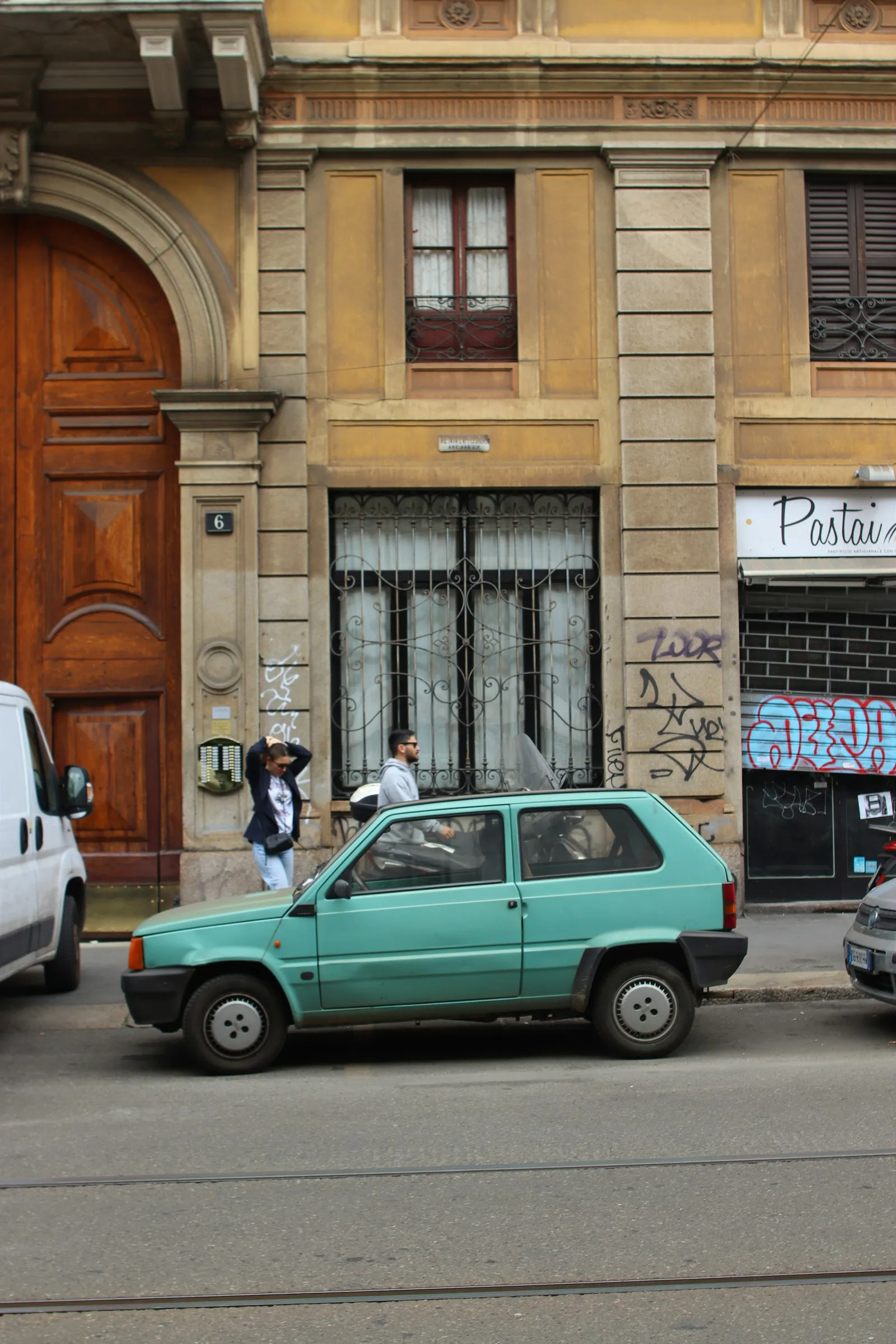
Foreigners can buy cars in Italy, but the car has to be registered to someone with an Italian address on the population register. In practice that means EU citizens need to be registered at the anagrafe, and non-EU citizens need a valid permesso di soggiorno and residence. You will also need your codice fiscale, which the codice fiscale calculator explains.
Buying new
A dealer (concessionario) handles registration, number plates and the Documento Unico, the single document that has replaced the old logbook and certificate of ownership since 2020. You arrange insurance before you collect the car, because it must be covered from the first metre. Expect the dealer to ask for your residence certificate and permesso. Finance is possible, but Italian lenders generally want to see Italian income or a solid Italian banking history, so many newcomers pay outright.
Buying used from a dealer
Dealers do the transfer paperwork for you and usually include it in the price, or quote it separately. A dealer sale carries the consumer legal guarantee of conformity, which a private sale does not, and that is worth something on an older car.
Buying used privately
Private sales are common in Sicily, often by word of mouth or through local listings. Here you and the seller must complete the passaggio di proprietà yourselves, or, as most people do, go together to an agenzia di pratiche auto or an ACI office and let them do it in one visit. More on that in the next section, and on the realities of rural used cars further down.
If you need a car before your residence comes through, a long term rental is the usual bridge. It costs more month by month, but it keeps you legal and mobile while the paperwork catches up.
What is the passaggio di proprietà, and what does it cost?
The passaggio di proprietà is the legal transfer of a vehicle from one owner to another. It has two parts: the seller's signature on the transfer is authenticated, and then the new owner is recorded on the public vehicle register (PRA) and on a new Documento Unico. The request must be made within 60 days of the authenticated signature.
The signature can be authenticated at the comune, by a notary, at an ACI office or at an authorised agency (STA, the Sportello Telematico dell'Automobilista). The agency route is the one most people use, because it does both steps together.
| Item | Typical amount |
|---|---|
| IPT, the provincial transfer charge | Depends on the car's engine power and the province; ask the agency |
| ACI fee (emolumenti) | €27 |
| Motorizzazione fee | €10.20 |
| Stamp duty on the application | €32 |
| Stamp duty for the Documento Unico | €16 |
| Authentication of the signature | A €16 stamp when the deed is done digitally at an agency, plus any fee charged by whoever authenticates it |
| Agency service fee | Varies; ask for a full quote first |
On an older small car the total is usually a few hundred euros, and on a powerful car it can be much more, mainly because of the IPT. Always ask the agency for a written quote before you agree a price with the seller, and agree in advance who pays the transfer costs. In Italy it is normally the buyer.
Before you hand over money on a used car, I would check three things online:
- A PRA search (visura PRA). For a few euros through ACI, it shows the registered owner and whether there is a lien or an administrative block (fermo amministrativo) on the car. A car with a fermo cannot legally be driven, and you do not want to inherit someone else's debts.
- The last revisione. The Portale dell'Automobilista lets you check when the car last passed its roadworthiness test and the mileage recorded at the time.
- Insurance cover. The same portal lets you check whether a plate is currently insured. Useful for spotting a car that has been off the road for years.
Should you bring your car from home to Sicily?
Usually not, and I would think hard before shipping a car across. Once you are resident, a foreign registered car cannot be driven in Italy after 90 days. It must be re-registered on Italian plates (nazionalizzazione) within that window or risk being impounded, and it cannot be driven while the process is under way. Re-registration involves:
- a certificate of conformity or technical approval for the car;
- the foreign registration document;
- an inspection at the Motorizzazione in some cases;
- registration at the Motorizzazione and then the PRA, on form NP-2C, within 60 days of the document that leads to the new Documento Unico, with the IPT, fees and stamps;
- for non-EU citizens, your permesso di soggiorno.
Cars from outside the EU also go through customs import. A private car can enter under the customs relief for people transferring their residence, but only if you have owned and used it abroad for at least six months before the move; ask a customs agent before you ship. My guide to shipping belongings to Sicily explains that relief. A US car built to American standards can be very hard to approve at all.
A right-hand drive car from the UK can be registered, but it is awkward for overtaking on narrow Sicilian roads and harder to sell later. For a car that is worth a few thousand pounds, the time, fees and risk usually outweigh the saving. For a recent, valuable car it may be worth pricing up, but get a quote from an agency first.
How does car insurance work in Italy? RC auto and the classe di merito
Third party liability insurance, RC auto, is compulsory for every car on the road, and also for cars parked on public roads. Comprehensive, fire and theft, and breakdown cover are optional extras. Policies are usually annual and do not renew automatically; your insurer must remind you before expiry, and there is a short grace period after it, but do not rely on it.
The classe di merito
Italian insurance uses a national bonus malus scale with 18 classes, from 1 (the best) to 18 (the worst). Each claim free year moves you down a class; an at-fault claim moves you up. Your class is printed on a certificate (attestato di rischio) held in a national database, and it follows you from insurer to insurer.
- Newcomers start in class 14. That is the entry class for a first policy with no Italian history, and it is why the first quote can come as a shock.
- Foreign no claims history. IVASS rules let a declaration from a foreign insurer set the class for a vehicle that was already insured abroad and is brought to Italy. For a car bought here, insurers are not obliged to use your foreign history, though some will take it into account. Either way, ask your old insurer for a letter showing your claim free years, with the policy dates, before you leave.
- RC familiare. Since 2020 you can take the best class held by a family member living with you on the same certificate of residence, even if their vehicle is a different type, as long as you have no at-fault claims in the last five years. This only helps once someone in your household has an Italian class.
Keep your insurance certificate details where you can find them, and check that a car is covered on the Portale dell'Automobilista if you are ever in doubt.
Why is car insurance in Italy so expensive, and is Sicily worse?
Premiums in Italy depend heavily on the province where the car is kept, your age, your class and the car. The insurance regulator, IVASS, publishes quarterly averages of what people actually pay for RC auto. In the second quarter of 2026 the national average was about €422 a year.
Sicily is not uniformly expensive. In the same quarter the dearest province in Italy was Naples, at about €596 on average, while Enna in the middle of Sicily was the second cheapest in the country, at about €312, just behind Potenza. Other Sicilian provinces sat in between.
So why do newcomers so often get high quotes?
- they start in class 14, with no Italian history;
- insurers price younger drivers, powerful cars and high claim provinces much higher;
- some insurers add extras by default, so compare like for like;
- a new licence holder, including someone who has just passed the Italian test after years of driving abroad, is often treated as inexperienced.
The best things you can do are bring proof of your claim free years, ask for quotes with and without extras, and use RC familiare as soon as anyone in your household can. Comparison sites and local brokers both work; I would get several quotes and read what is included. Insurance prices move quickly, so treat the IVASS averages as a guide rather than a quote.
What are the bollo and the revisione?
The bollo
The bollo auto is an annual ownership charge paid to the region by whoever owns the car, whether or not it is driven. The amount depends on the car, and you can check it and pay online or at many tobacconists and ACI offices.
The revisione
The revisione is Italy's roadworthiness test, similar to the British MOT. A new car has its first one four years after first registration, then every two years. It checks brakes, lights, emissions, tyres, steering and so on, and the result and the mileage are recorded on the national database.
| Where | Typical cost |
|---|---|
| At the Motorizzazione | €45, paid through PagoPA |
| At an authorised private centre | Around €79, all fees included (a rise has been proposed) |
Most people use an authorised garage because it is quicker to book. Driving with an overdue revisione risks a fine and can complicate an insurance claim, so I would put the date in the diary as soon as you buy the car. Over a year, the main fixed costs of a car in Sicily are insurance, the bollo and half a revisione, before fuel, tyres and servicing; my cost of living in Sicily guide puts that alongside the rest of the household budget, and the guide to real life in Sicily covers the wider picture.
Petrol, diesel, hybrid or electric: which car suits Sicily?
Fuel prices change weekly, but the Ministry of Enterprise publishes national averages. Between 10 and 13 November 2026, the national average for self service petrol was between about €1.97 and €2.00 a litre, and for diesel between about €2.21 and €2.24. Diesel has cost more than petrol at the pump for much of 2026, and by more than 20 cents a litre this autumn, which undercuts the old Italian habit of buying diesel for long distances.
- Petrol is the simple choice for small cars and mixed driving, and petrol stations are everywhere.
- Diesel still suits high mileage and heavy loads, because diesel engines use less fuel, but the pump price now works against it, and older diesels can face restrictions in some city areas.
- LPG and methane conversions are common in Italy and some rural stations sell LPG. Check what is on your usual routes before you choose.
- Hybrid cars make sense for town and coast driving.
- Electric is growing. Italy had over 84,000 public charging points by mid 2026, but coverage in rural Sicily is thinner than in the north. If you can charge at home it can work well. We generate our own power from solar, so I can see the appeal; just look at a charging map along the roads you will actually drive before you commit.
For a rural house on a rough track, ground clearance matters more than the fuel. A small car with decent clearance and four wheel drive is popular in the hills for good reason. The off-grid living guide touches on the practical side of life at the end of a track.
Buying a used car in rural Sicily: the honest version
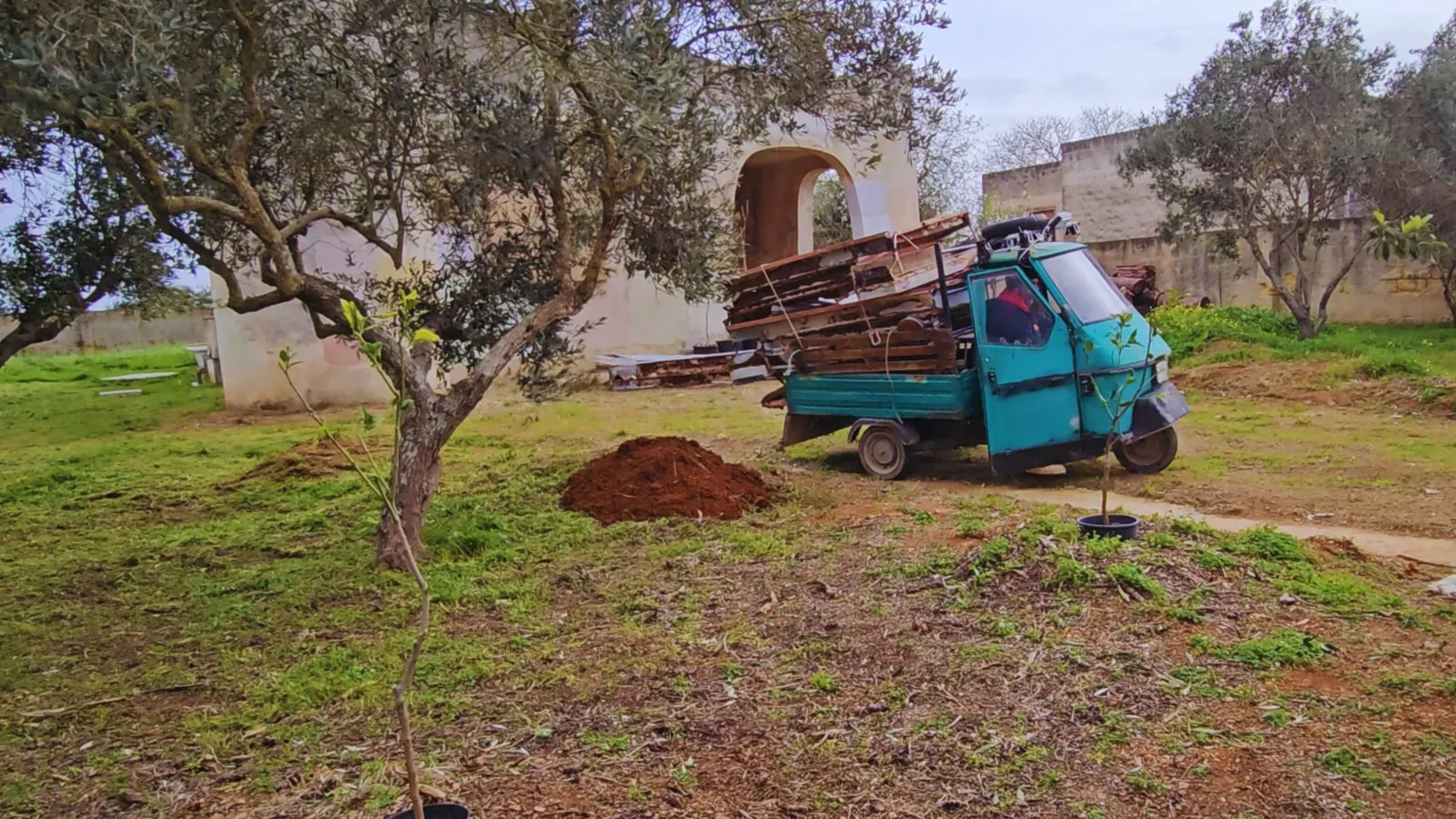
This is where expectations most often meet reality. Used cars in Sicily, especially small, practical ones, can seem expensive for their age and mileage compared with the UK. A car that has done a lot of kilometres on country roads can still command a good price, because everyone out here needs one and old cars are kept running for a long time.
What I would keep in mind:
- Word of mouth is how many cars change hands. Tell people at the bar, the hardware shop and the comune that you are looking. A car someone in the village knows is often a safer bet than a stranger's listing.
- Get a mechanic to look at it. Ask a local garage to check the car before you buy. Country roads are hard on suspension, steering, tyres and underbodies, and a car that has lived on a track will show it.
- Check the paperwork, not just the car. Run a PRA search for liens and administrative blocks, check the last revisione and its mileage, and make sure the name on the Documento Unico matches the person selling it.
- Never pay before the transfer is done. Go to the agency together, pay when the transfer is authenticated, and take the keys and documents there and then.
- Agree who pays the transfer. Normally the buyer, but put it in writing.
- Insure it before you drive it home. The policy must be in place from the moment the car is yours.
Once you own a car here, you will learn the rhythm of rural life with one: the long drives to an office that might be closed, the dust after summer, the joy of a good local mechanic. It is part of the deal of living in the countryside, and for me it is a price worth paying. If you are still weighing up where to live, the guide to rural life in Sicily gives the wider picture.
Frequently asked questions
Can I drive in Italy on a UK licence if I live there?
Yes, for a limited time. If you became resident in Italy on or after 1 January 2023, you can drive on your UK licence for 12 months from the date of residence. After that you must exchange it for an Italian licence, which you can do without a test under the UK and Italy agreement, as long as you apply within six years of becoming resident.
Can I exchange a US driving licence in Italy?
No. US licences can only be exchanged by diplomatic staff and their families. As a resident you can drive on a US licence with an International Driving Permit or official translation for one year after becoming resident. After that you must pass the Italian theory and driving tests.
Can I exchange an Australian or Canadian licence in Italy?
Not as a normal resident. Australia is not on the Italian list of countries with exchange agreements, and Canadian licences can only be exchanged by some diplomatic staff. Holders can drive for one year after residence with an International Driving Permit or translation, then need to pass the Italian tests, usually through a local driving school.
Can a foreigner buy a car in Italy?
Yes, but the car must be registered to someone with an Italian residence. EU citizens need to be registered at the anagrafe, and non-EU citizens need a valid permesso di soggiorno and residence. You will also need a codice fiscale. Dealers handle the paperwork; for a private sale most people use an agency.
How much does a passaggio di proprietà cost in Italy?
It is made up of fixed fees and stamps, about €27 to ACI, €10.20 to the Motorizzazione, €32 and €16 in stamps and €16 for the signature authentication, plus the provincial transfer charge, which depends on the car's engine power and the province. Agency fees are on top. For a small car the total is usually a few hundred euros.
What class do I start in for car insurance in Italy?
A first policy with no Italian history normally starts in class 14 of the 18 class bonus malus scale. If you bring a car that was insured abroad, a declaration from your foreign insurer can set its class. For a car bought in Italy, insurers do not have to use your foreign history, but it is worth bringing a no claims letter and asking.
Is car insurance more expensive in Sicily?
Not everywhere. IVASS figures for the second quarter of 2026 put the national average at about €422 a year. Naples was the dearest province, at about €596, while Enna in central Sicily was the second cheapest in Italy, at about €312. Prices vary a lot with province, age, class and car, so newcomers starting in class 14 often see higher quotes.
How often does a car need a revisione in Italy?
A new car has its first revisione four years after first registration, then one every two years. At the Motorizzazione it costs €45, and at an authorised private centre around €79 with all fees included. Driving with an overdue revisione can lead to a fine.
Can I bring my UK car to Sicily?
You can, but it is rarely worth it. Once you are resident, a foreign registered car cannot be driven after 90 days and must be re-registered on Italian plates, which involves technical documents, fees and sometimes an inspection. A right-hand drive car is also awkward on narrow roads and harder to sell later.
Is diesel or petrol cheaper in Italy?
Petrol is cheaper at the pump, and has been for much of 2026. In mid November 2026, Ministry figures put the national self service average at about €1.97 to €2.00 a litre for petrol and about €2.21 to €2.24 for diesel. Diesel cars use less fuel, so high mileage drivers may still save, but check current prices first.
Sources and small print
- Ministry of Infrastructure and Transport: converting a foreign licence
- GOV.UK: Living in Italy, driving section
- ACI: passaggio di proprietà
- ACI: registering a foreign vehicle in Italy
- Portale dell'Automobilista: revisione and insurance checks
- Ministry of Infrastructure and Transport: periodic revisione
- IVASS: consumer guides on RC auto and the bonus malus scale
- IVASS: IPER report on what drivers paid for RC auto, second quarter 2026
- Ministry of Enterprise: fuel price observatory
- Ministry of the Environment and Energy Security: monthly fuel prices, 2026
- Motus-E: charging infrastructure in Italy
Fees and fuel prices were checked in November 2026 and change regularly. For anything to do with taxes on a vehicle, ask an agency or a commercialista.
Credits
Photo: davide ragusa, Unsplash Licence, via Unsplash.
Photo: Rui Alves, Unsplash Licence, via Unsplash.
Photo: Operation Sicily®, all rights reserved, via operationsicily.com.
 The weekly YouTube series