

What are your options for moving belongings to Sicily?
There are five realistic ways to move your things to Sicily. Which one suits you depends on how much you are bringing, how far it is coming, and how much of the work you want to do yourself.
| Option | Best for | Main trade-off |
|---|---|---|
| Full removal (dedicated vehicle) | A whole house, fixed dates, fragile or valuable items | The most expensive option |
| Part load or groupage | A house or flat when your dates are flexible | Slower; your things share a lorry and wait for it to fill |
| Pallet or crate service | A few boxes, a bike, a few pieces of furniture | You pack and wrap; size and weight limits |
| Hired van and ferry | A small flat, people happy to drive and lift | Your time, fuel, tolls and the ferry; heavy lifting |
| Sea container | Moves from the US, Canada or Australia | Weeks at sea, port handling and onward delivery |
Before you get quotes, it helps to be ruthless about what is coming. Moving is charged mostly by volume, and a lot of what fills a house in Britain is either easy to buy in Sicily or wrong for the climate. More on that below. Selling furniture before you go also frees you from storage bills if your Sicilian home is not ready, and many people find that a smaller first load makes the first months simpler. You can always send for more later, once you know how the house works and what you actually miss.
If you are still working out the order of the whole move, the Italy move planner lays out the steps, and my guide to the cost of living in Sicily helps you judge what is worth shipping and what is cheaper to buy there.
Full removals or part load: which is right for a move to Sicily?
Full removals
A dedicated lorry collects from your home and drives to Sicily with only your things on board. The crew can pack for you, dismantle and rebuild furniture, and deliver on an agreed date. It costs the most, but it is the fastest and the least likely to go wrong, and the price is clear from the start.
Part loads and groupage
With a part load, your things share space on a lorry with other people's moves going the same way. You pay for the volume you use, so it is often much cheaper than a full removal. The catch is time: the remover waits until the lorry is full enough for the route, so collection and delivery dates are usually given as windows rather than days, and goods may be stored for a while at a depot. Sicily is at the far end of the road from northern Europe, and fewer lorries make the trip than to the big northern Italian cities.
Pallets and crates
For a small move, some carriers take a standard pallet or a wooden crate door to door. You pack, wrap and strap everything to the pallet, and it travels on the carrier's network. It suits tools, books, a bicycle and a few boxes, and it is often the cheapest way to send a modest amount.
When you ask for quotes, ask each remover the same questions:
- Is this a dedicated vehicle or a shared load, and what are the collection and delivery windows?
- Will the same lorry reach my house, or will goods be moved to a smaller vehicle?
- Is storage at either end included, and for how long?
- Is customs clearance included, and who is the agent in Italy?
- What insurance is included, and what does it exclude?
How to move to Sicily by van and ferry

If you are moving from the UK or elsewhere in Europe with a modest amount of stuff, driving it down yourself is a real option. It is a long trip, so plan rest stops and check that your hire company allows the van abroad and on ferries. From the Italian mainland there are two ways onto the island.
The long ferries to Palermo
| Route | Typical crossing time | Notes |
|---|---|---|
| Genoa to Palermo | Around 19 to 20 hours | Overnight; saves the drive down the whole of Italy |
| Civitavecchia to Palermo | Around 13 hours | Convenient from Rome and central Italy |
| Naples to Palermo | Around 9 to 11 hours | Several operators, usually overnight |
Before you set off, check three practical things. First, the van's weight: a standard UK car licence covers vehicles up to 3,500 kg maximum authorised mass, and a bigger lorry needs a different licence category. Second, the paperwork: a hired van taken abroad from the UK needs the hire company's permission and the certificate it issues for travel abroad, and you should carry your licence, insurance details and passport. Third, the load: an overloaded van is dangerous on mountain motorways and can be fined, so weigh up the heavy items, such as books, tools and tiles, before you pack them all.
Overnight ferries let you sleep in a cabin and arrive fresh in Palermo, which is a gift after days on the road. Book the van as a commercial or larger vehicle if it is over the car size limit, and check the height: high-top vans can fall into a more expensive category.
The Strait of Messina
The alternative is to drive the length of Italy to Villa San Giovanni in Calabria and take the short ferry across the Strait to Messina. The crossing takes about 20 minutes, ferries run around the clock, and in normal times there is a departure roughly every 40 minutes, so you rarely need to book. It is the cheapest way across, but it adds a long drive at both ends if you are heading for the west of the island.
The driving in Sicily guide covers tolls, fuel and the roads once you land. Remember that Italian motorway tolls and fuel add up on a long drive with a loaded van, so price them alongside the ferry before you decide it is cheaper than a part load.
Shipping a container to Sicily from the US, Canada or Australia
From outside Europe, sea freight is the normal route for household goods. Your remover packs your things into a shared container (consolidation) or your own 20 foot or 40 foot container, which is then trucked to a port, shipped, cleared through customs in Italy and delivered to your door.
- Shared container. Cheaper for a modest volume, but your goods wait for a full container and are handled more often.
- Sole use container. Better for a full house; the container is sealed at your home and opened in Italy.
- Air freight. Fast but expensive per cubic metre; worth it only for a few essential boxes.
Depending on the shipping route, your container may land at a mainland Italian port and finish the journey by lorry and ferry, or come into a Sicilian port. Either way, the last stage to a rural house is usually done in a smaller vehicle. Ask the remover exactly how the final leg works.
For a move this size, most people ship only what really matters and sell or give away the rest. Electricity is a good example: Italy runs at 230 volts and 50 hertz, while North American appliances run at around 120 volts and 60 hertz, so many kitchen appliances and power tools are not worth the space. The US, Canada and Australia guides cover the visa and paperwork side of the same move.
What should you bring to Sicily, and what should you buy there?
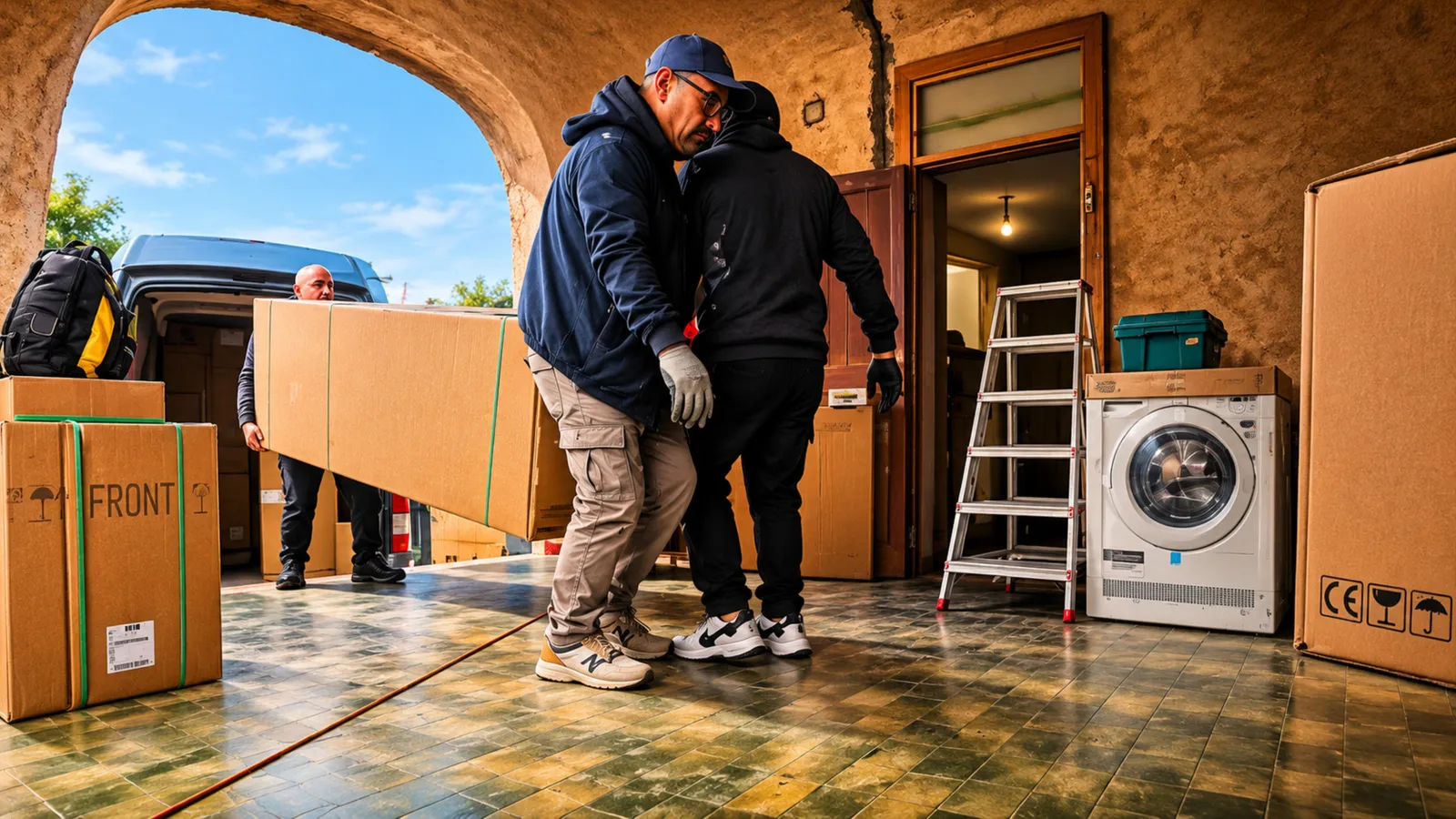
The question to ask about every item is whether it is cheaper to ship than to replace, and whether it suits a Sicilian house. Stone and tile floors, hot summers and mild, damp winters change what is useful.
| Usually worth bringing | Usually better to buy in Sicily |
|---|---|
| Things you cannot replace: photos, papers, heirlooms, art | Large white goods, which are easy to buy and deliver locally |
| Good quality hand tools, if you plan to do work yourself | Heavy, low value furniture |
| Books, records and hobby kit | Mattresses and bedding, because Italian bed sizes differ |
| Specialist kitchen kit you love | Electric heaters and fans, bought for the local supply |
| Bicycles and outdoor gear | Garden pots, soil and anything bulky and cheap |
| Warm clothes and a good duvet for winter | Most cleaning and household basics |
Do not underestimate winter. Sicilian houses are built for summer heat, and stone houses can be cold and damp inside from December to February. Warm layers, blankets and slippers earn their place in the van. My guide to Sicily in winter explains why.
If you plan to do work on a house yourself, as I do on ours, good hand tools are worth the space, and UK appliances use the same 230 volt supply with a different plug, so an adaptor or a plug change is enough. Larger power tools are a judgement call; many people sell theirs and buy locally so that spares and servicing are easy.
If you are renting at first, check what the flat already has before you ship furniture to it. Many rentals in Sicily come furnished, and storage while you search for a house to buy can cost more than the furniture is worth. The renting or buying guide helps with that decision.
How long does it take to ship belongings to Italy?
Every move is different, but the broad pattern is predictable:
- Full removal from the UK or northern Europe. The fastest door to door option. The drive itself takes a few days, and the dates are fixed when you book.
- Part load or groupage. Usually weeks rather than days, because the lorry waits to fill and may stop at depots. Ask for the collection and delivery windows in writing.
- Pallet service. Often one to a few weeks, depending on the carrier's network in southern Italy.
- Van and ferry. As quick as you can drive it, plus the ferry.
- Sea container from the US or Australia. Plan for several weeks at sea, plus time for packing, port handling, customs and delivery at the Sicilian end.
The best way to avoid stress is to plan to live without your things for a while. Pack a separate set of essentials that travels with you: documents, a laptop, bedding, a basic kitchen kit, medicines, chargers and clothes for both warm and cool weather. Book the removal well ahead if you are moving in summer, which is the busy season for removers.
On delivery day, be there in person, or have someone you trust there with a copy of the inventory. Number every box and mark the room it belongs in, with a simple plan of the house taped to the front door, so that the crew can put things where they belong rather than in a heap in the first room. Keep the kettle, a few chairs and the tools for the bed frames in a box marked to open first. If the crew is transferring goods to a smaller van at the end of the track, allow extra hours for the day, and have cold water ready in summer: it is hard work on a Sicilian hillside in August.
Customs when moving to Italy from outside the EU
Since Brexit, a move from the UK to Italy is a move from outside the EU, just like a move from the US, Canada or Australia. That means your household goods pass through customs when they enter the EU. Your remover or a customs agent will handle the detail, but it helps to know the outline.
- EU law allows people who are transferring their normal residence from outside the EU to bring in their personal belongings under a relief for transfer of residence, which the Italian customs agency, the Agenzia delle Dogane e dei Monopoli, administers.
- The relief covers personal property for private use, which can include furniture and household goods, bicycles and private cars.
- To qualify, you must normally have lived outside the EU for at least 12 consecutive months, and have owned and used the goods at your previous home for at least six months before the move.
- Some things are excluded, including alcohol, tobacco, commercial vehicles and equipment for professional use, other than portable tools of a trade.
- Goods should normally be declared within 12 months of establishing your residence in Italy.
- You will usually need a detailed inventory, your passport, and evidence of your residence or your move, such as a visa or your registration at the comune. Italian consulates abroad can advise on the forms they issue.
Ask your remover early whether customs clearance is included and which documents they need, and keep the inventory honest and complete. For the official rules, start with the customs agency FAQ in the sources below, and for UK citizens the GOV.UK pages on moving and living abroad. For anything about duties or charges, ask the remover's customs agent rather than guessing. If you are thinking of bringing a car, read my guide to owning a car in Sicily first: re-registering a foreign car is slow and costly. The guide for UK citizens after Brexit covers the residency side.
Getting a removal lorry down a narrow rural road
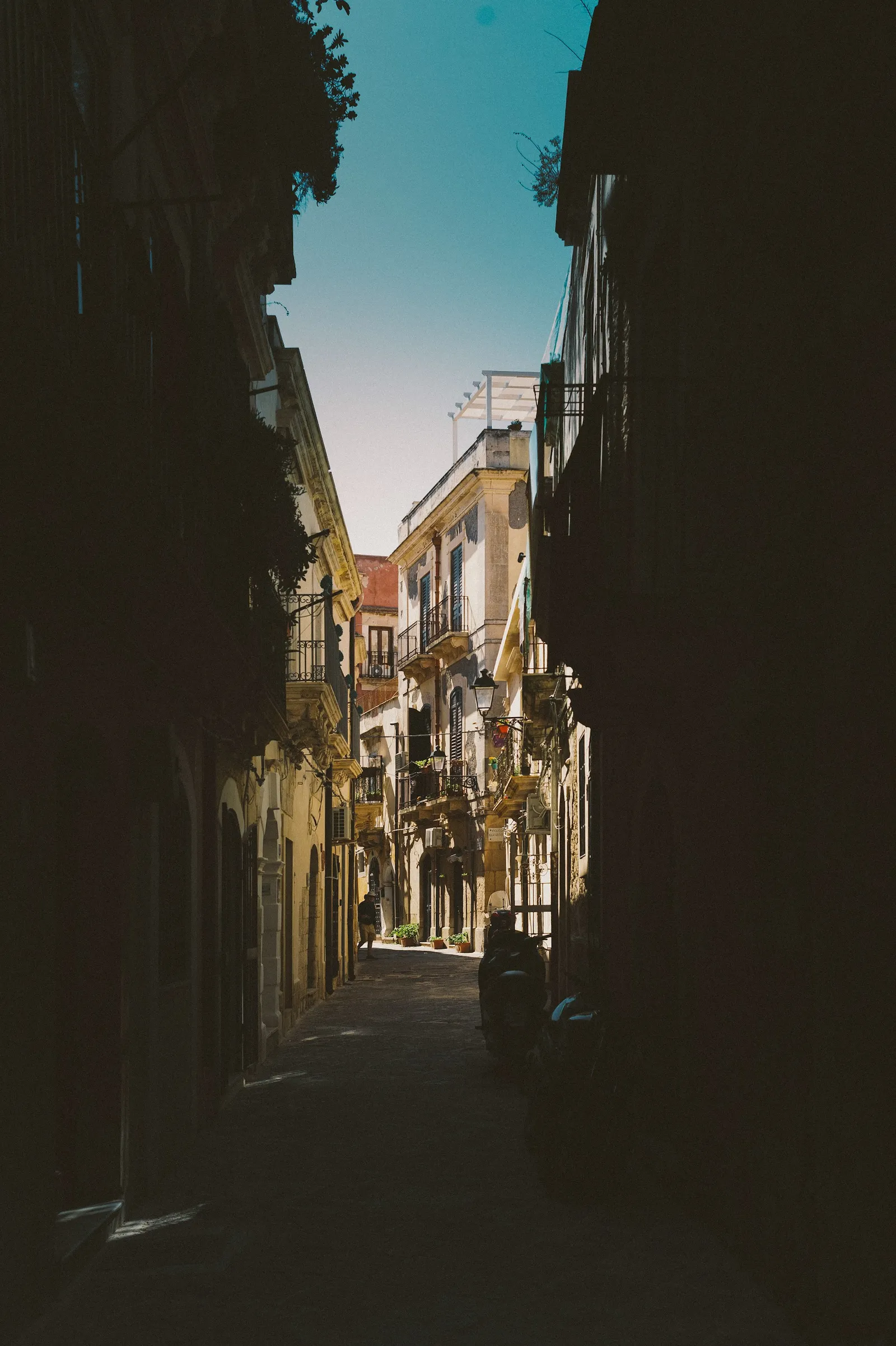
This is the part most quotes underestimate. A full size removal lorry that rolls easily down an English street may not get anywhere near a Sicilian farmhouse at the end of a dirt track, or a townhouse in a medieval centre with lanes a car can barely pass.
- Tell the remover exactly where you live. Send photos of the approach, the last few hundred metres and the gate. A map pin with satellite view helps.
- Expect a shuttle. Many deliveries to rural or historic properties transfer goods to a smaller van for the last stretch. That costs extra, so get it in the quote rather than on the day.
- Check the weather. After heavy autumn rain, unmade tracks can be too soft for a laden vehicle.
- Town centres. In historic centres you may need permission from the comune to park the lorry on the street, and access to restricted traffic zones (ZTL) can be limited. Ask the comune or the Polizia Municipale in good time.
- Steps and stairs. Older houses often have narrow stairs and no lift. Measure the doorways and the turns before you ship that big sofa.
Our own house sits in the countryside of western Sicily, and we live off grid, with solar power, a well and a large water tank. A house like that is wonderful to live in and challenging to deliver to. If you are buying, factor access into your choice; the buying checklist and the off-grid living guide both touch on it.
Removal insurance and choosing a remover
Goods in transit can be damaged, delayed or, rarely, lost. Most removers include basic liability, but it is often limited by weight or volume and will not pay what your things are worth. Separate transit insurance is usually offered as an extra.
- Make a valued inventory. List each item or box with a realistic replacement value. Photograph valuable items before they are packed.
- Read the exclusions. Items you pack yourself are often covered only for total loss, not breakage. Some policies exclude electronics, plants, cash and jewellery.
- Check storage cover. If goods will wait in a depot, make sure the insurance covers storage too.
- Note damage on delivery. Write it on the delivery note before you sign, and report it within the time limit in the policy.
When choosing a remover, look for membership of a recognised trade body. In the UK, the British Association of Removers has an overseas group whose members are covered by an advance payment guarantee, and internationally FIDI runs the FAIM quality standard for removers. Membership does not guarantee a perfect move, but it gives you a code of practice and a route for complaints. Get at least three quotes, ask for a home or video survey rather than a guess, and be wary of quotes far below the rest.
Moving pets to Sicily
Pets are part of many moves, and they have their own rules. This is only a summary, so check the official pages for your country before you book anything.
From Great Britain to the EU, dogs, cats and ferrets currently need:
- a microchip, fitted before or at the same time as the rabies vaccination;
- a rabies vaccination, given when the animal is at least 12 weeks old;
- a wait of at least 21 days after the primary vaccination before travel;
- an animal health certificate from an official vet, used within 10 days of issue to enter the EU;
- entry through a travellers' point of entry.
From the US and other non-EU countries the principles are similar, with an EU health certificate endorsed by the national veterinary authority; the US Department of Agriculture's pet travel pages list the current certificate for Italy. The moving from the US guide has a section on pets. On a long drive and ferry, check the operator's pet rules: some ferries have pet cabins or kennels, and these book up early in summer.
A checklist for moving your belongings to Sicily
- Decide what is coming. Sell, give away or store the rest before you ask for quotes.
- Measure the access at the Sicilian end: track, gate, stairs and doors. Take photos.
- Get at least three quotes based on a survey, all for the same volume and service.
- Check trade body membership, insurance cover and what is excluded.
- For moves from outside the EU, ask what customs documents the remover needs, and start your inventory.
- Line up your Italian paperwork: codice fiscale, visa or permit, and the address you will register at the comune. The codice fiscale calculator helps with the first.
- Book ferries or the removal early if you are moving in summer.
- Arrange pet paperwork in time for the vaccination waits.
- Pack an essentials box that travels with you, with documents, medicines and chargers.
- Set up the basics at the house before delivery: power, water and a phone signal. My utilities guide covers how.
- On delivery, check every item against the inventory and note any damage before you sign.
Frequently asked questions
How do I move my belongings from the UK to Sicily?
Most people use an international remover, either for a full removal with a dedicated lorry or a cheaper part load shared with other moves. For smaller moves, a pallet service or a hired van driven down and taken across on a ferry can work. Since Brexit, a UK move goes through EU customs, which the remover usually handles.
What is a part load or groupage removal?
A part load, also called groupage, means your belongings share space on a lorry with other people's moves heading the same way. You pay only for the space you use, so it is usually cheaper than a full removal, but dates are given as windows and goods may wait at a depot until the lorry is full.
Which ferry is best for moving to Sicily with a van?
It depends on where you start. Genoa to Palermo is around 19 to 20 hours overnight and saves the drive down Italy. Civitavecchia to Palermo is around 13 hours, and Naples to Palermo around 9 to 11 hours. The cheapest crossing is the 20 minute ferry over the Strait of Messina, but it adds a long drive.
Do I pay customs when moving to Italy from the UK or US?
Household goods coming from outside the EU, including the UK, go through customs. People transferring their normal residence to Italy can usually bring in personal belongings they have owned and used for at least six months under a transfer of residence relief, declared within 12 months of becoming resident. Ask your remover's customs agent about your situation and check the Agenzia delle Dogane rules.
How long does it take to ship furniture to Sicily?
A full removal from the UK takes a few days on the road with fixed dates. A part load usually takes weeks rather than days, because the lorry waits to fill. A sea container from the US or Australia takes several weeks at sea, plus packing, port handling, customs and delivery, so plan to live without your things for a while.
Can a removal lorry reach a rural house in Sicily?
Often not all the way. Many rural tracks and historic town centres are too narrow or soft for a large lorry, so goods are moved to a smaller van for the last stretch. Send your remover photos of the approach and the gate before they quote, so that the shuttle is priced in rather than added on the day.
Should I bring my furniture to Sicily or buy new?
Bring things you cannot replace, good tools if you plan to do work yourself, books and hobby kit. Heavy, low value furniture, mattresses and large appliances are often cheaper to buy locally, especially as Italian bed sizes differ from British and American ones. If you are renting first, check what the flat already has.
Can I take my dog to Sicily from the UK?
Yes. Dogs, cats and ferrets from Great Britain need a microchip, a rabies vaccination given at 12 weeks or older, a wait of at least 21 days after the primary vaccination, and an animal health certificate used within 10 days of issue to enter the EU, arriving through a travellers' point of entry. Check the GOV.UK rules before you travel.
Do I need insurance for an international removal?
It is wise. Basic remover liability is often limited by weight or volume and will not cover the real value of your things. Transit insurance based on a valued inventory gives better cover, but read the exclusions, especially for items you pack yourself, and check that storage is covered if goods wait in a depot.
Sources and small print
- Agenzia delle Dogane e dei Monopoli: customs FAQ, including transfer of residence
- EU Regulation 1186/2009 on reliefs from customs duty
- GOV.UK: Living in Italy
- GOV.UK: taking your pet abroad
- Your Europe: travelling with pets
- USDA APHIS: pet travel from the US
- GNV: ferries from Genoa, Civitavecchia and Naples to Palermo
- Caronte and Tourist: crossing the Strait of Messina
- British Association of Removers
- FIDI: the FAIM quality standard for international removers
Ferry times and operators change with the season. Rules for customs and pets are set by the authorities above; check them before you move.
Credits
Photo: Marinaio56, CC BY-SA 4.0, via Wikimedia Commons.
Photo: Effems, CC0, via Wikimedia Commons.
Photo: Operation Sicily®, all rights reserved, via operationsicily.com.
Photo: Egor Myznik, Unsplash Licence, via Unsplash.
 The weekly YouTube series