
In this episode
- The cement mixer running on the generator with no mains power
- Every chase concreted so the conduit cannot shift when the wires go in
- A tip for keeping cement workable in the mixer
- The old roof water tank moved for a temporary rainwater system
- Digging the trench to bedrock and cutting out roots with the chainsaw
Firing up the cement mixer
This week I am sealing the electrical wall chases with concrete and saving the old roof water tank for rainwater. Last year I moved to Sicily and bought this abandoned, rodent infested villa for less than €25,000, with no experience and no team, and my aim is to finish it by Christmas 2025.
With no mains power, water or gas, the cement mixer runs on the generator on the veranda. I shovel in sand from the covered pile, add cement and water, and get going. A tip from the captions: keeping the mixer turning with cement inside stops the mix from setting too quickly, so it stays workable for longer.
Sealing the electrical chases with concrete
The electrician wants every chase sealed before the wiring goes in, so the conduit cannot shift or come loose when he feeds the wires through. In the bedroom I spray each chase with water, press mortar in around the black conduit in the floor and lower walls, level it flush with the tiles and clean off the excess. Then I move on to the living room and the vertical chases along the doorway.
The walls are so porous that the cement sets quickly. My method is to apply it, let it partly set, scrape off the excess, leave it to firm up and then brush off what is left. Keeping the floors clean means I can put the excess back in the mixer, which cuts waste and keeps the workspace tidy. It takes far more concrete than I expected, and several mixes. The floor chases I started in episode 22 are now joined by the walls.
Lewis and the branch pile
Outside, my friend Lewis carries on mulching the huge pile of branches from episode 23, so I can dig the trench for the mains power supply. The mulch is saved for the raised beds. The smaller pine branches will go for either mulch or firewood, and we haul the bigger logs across the garden and stack them by the curved wall of the tower, debating along the way whether the living room should have a log burner or whether an outdoor fire pit is the better idea.
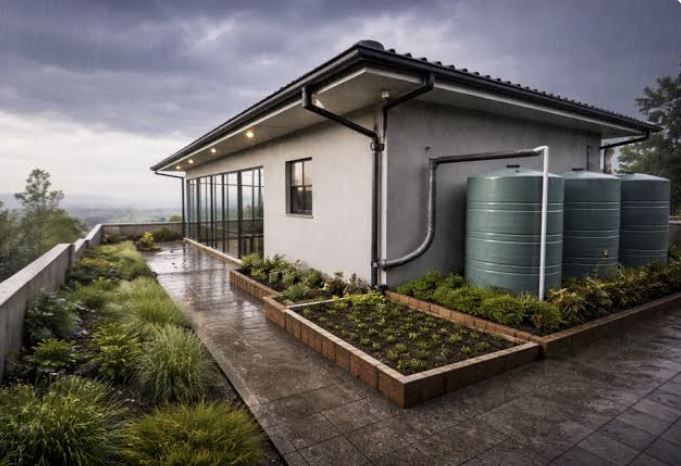
Moving the old water tank for rainwater
Together we carry the old metal water tank from the roof across the garden to the side of the house. I lost the footage of removing it from the roof when my hard drive was damaged, as I explained in episode 16. Next week one of my jobs is setting up a temporary rainwater catchment system with it, to cut down on trips to the public tap. We set up the extension ladder against the outside wall and climb up to check where the water runs off the roof. It is Lewis's first time setting up a ladder, and the caption suggests it might be his last.
The rainwater system is built in episode 25. My guide to rainwater harvesting in Sicily covers the bigger picture, and the rainwater harvesting calculator shows what a roof can collect.
Digging the trench, roots and all
In the front garden we dig the long trench along the driveway towards the gate with a pickaxe and shovel. Tree roots run straight across the line, so out comes my Stihl chainsaw to cut through the thickest ones, and we keep going until we hit the limestone bedrock. This is the trench the mains cable will run through, the reason the planter footings had to come first, as I explained in episode 21.
A builders merchant run and tea over a stump fire
Then it is off to a local builders merchant for aerated concrete blocks and long lengths of PVC pipe, plus big 25 litre containers of water and bottles of drinking water. Everything is unloaded and stacked under the covered porch. The day ends with tea boiled over a stump fire.
I also take a moment to thank everyone. This has been a huge journey, with a lot of mess and a lot of long hours, and your comments really encourage me to keep going. I read every one. If there is anything you would like to see more or less of, let me know. And if you could like, subscribe and share the videos with a family member, friend or work colleague, it really helps the channel grow. My article on off grid water versus mains water sets out how I see the choice now.
Frequently asked questions
Why concrete electrical conduit into the chases before wiring?
So the conduit cannot shift or come loose when the electrician pulls the wires through. My electrician wanted every chase sealed before the wiring went in.
How do you stop cement setting too fast in hot weather?
Keep the cement mixer turning with the mix inside, and spray porous walls with water before applying it. The villa walls are so porous that cement sets very quickly.
Can you reuse an old roof water tank?
I moved the old metal tank from the roof to the side of the house to use as a temporary rainwater catchment system, cutting down trips to the public tap.
How deep did you dig the trench for the mains cable?
At the villa we dug the trench down until we reached the limestone bedrock, cutting through tree roots with a chainsaw along the way.
More episodes on the same job: Rewiring and electrics · Water and plumbing


 The weekly YouTube series