
In this episode
- Two 20 by 20 cm oak beams, two metres long, at €100 each
- Sanded with 60, 80 and 120 grit, then 240 grit on the orbital sander
- A local landscaper mulches the branch pile for €300 a day
- Concrete footings poured for the rear garden terrace
- Air con pipe holes foamed shut to keep the bugs out
A big week for the garden and the tower
This week I start restoring reclaimed oak beams with a belt sander, ready to turn them into a feature for the tower. I also bring in a local team to finally tackle a job I have wanted done for months, one that makes a big difference to the garden. Lewis is still on site too, working on the concrete footings for the new rear terrace, and the food clips are back at the end of the day.
It starts with a run to the timber and building merchants for the beams and cement, and the unboxing of a new belt sander.
Two oak beams at a surprisingly good price
I picked up two oak beams from a local timber yard for €100 each. In the UK you would probably pay around £500 for these. They are 20 centimetres square and two metres long, and once I finish knocking through the doorway into the tower, which I started in episode 33, they will support the ceiling above.
Because the wall is curved, I will need to install two beams back to back. They should add real character to the space, and I am hoping to use the same oak for the staircase so everything ties together. A lot of viewers are in the USA, so I ask in the comments what beams like these would cost there. If you are pricing materials for your own project, my real world renovation cost breakdown shows what things cost here.
How I sand solid oak
These beams sat outside for years, and they are very solid, much denser and tougher to sand than softwood. I work up through the grits so each one removes the scratches of the last:
- 60 grit on the belt sander to take off the weathered surface.
- 80 grit on the belt sander.
- 120 grit on the belt sander.
- 240 grit on the orbital sander to finish.
Once they are smooth, I plan to wax them, and I am really hoping they come up beautifully. The finishing and the lifting into place follow in episode 35 and episode 36.
A proper mulcher at last
I have hired a local landscaper who also does work for the council, and thankfully he has brought a proper mulcher, unlike the one I rented from Leroy Merlin in episode 23. He tackles the huge pile of branches that has sat along the side of the house for far too long, a job I have been desperate to get done. At €300 for the day I think it is great value, especially compared with the €120 I paid to hire that machine. Meanwhile Lewis rakes out the mulch from our earlier attempt.
After the pile, the landscaper runs his machine over the garden to tidy up the pine cones, small twigs and other debris, and all the mulch goes onto the planter beds. There is not nearly enough to cover both beds properly, but because he often dumps the mulch from council work, he has kindly agreed to bring me a couple of loads when he has it. A thick layer will look great, suppress the weeds and help the soil hold moisture in the summer heat. My article on growing your own food in Sicily has more on what these beds became.
Pouring the rear terrace footings
With the terrace set out and squared in episode 31 and episode 32, Lewis and I mix and pour the concrete footings that the terrace walls will stand on. Every course and the 10mm per metre fall are already marked on the corner posts, ready for the first blocks once the concrete has cured. The walls themselves start in episode 37.
Inside, I deal with the holes made to run the pipes from the indoor air conditioning units to the external units. When I first made them I stuffed in rocks to stop rodents getting in. Now I seal them temporarily with expanding foam, because it is getting warmer and all sorts of bugs are starting to appear.
Stumps, pegs, fruit trees and a barbecue
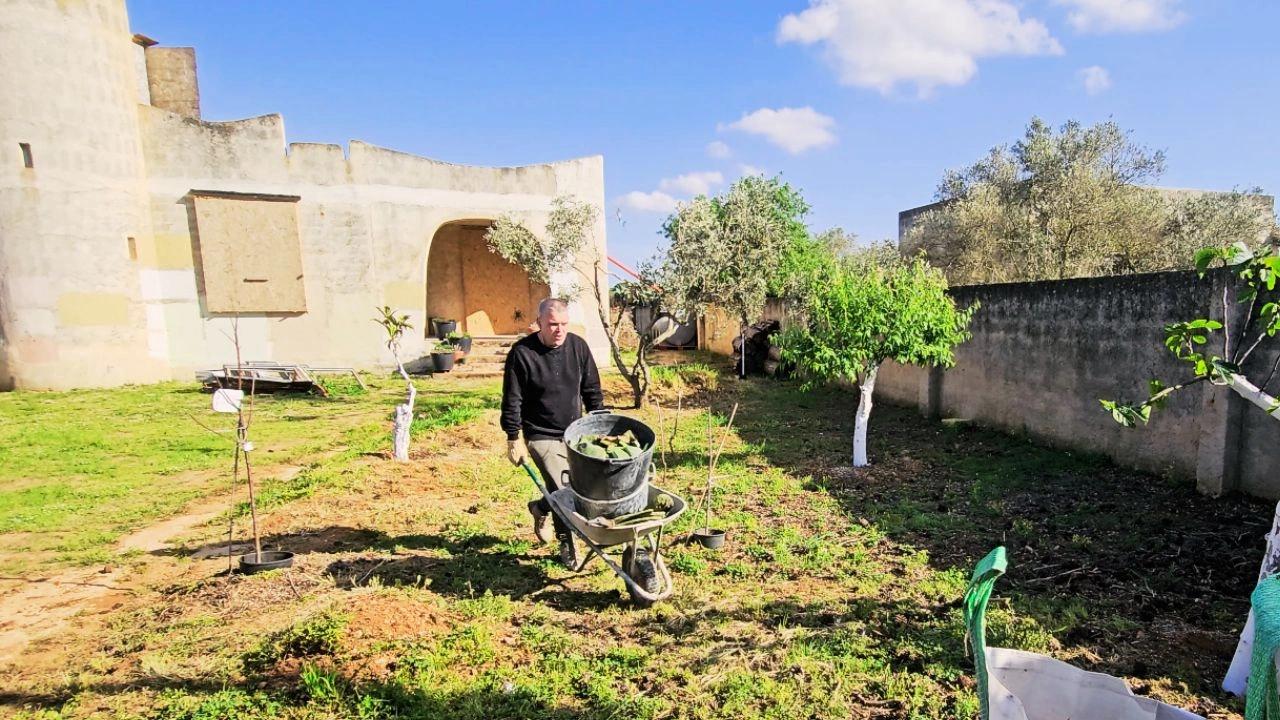
The rest of the week is outside. After feeding the stray cat, rubble goes in as backfill around the cesspit, more tree stumps come out, and I cut off the metal pegs along the garden walls. The potted fruit trees are moved into the sun beside the newly mulched beds. Then, after a garden tidy, we finish with burgers on the barbecue under the stars. My practical guide to renovating in Sicily covers how jobs like these fit around the bigger ones.
Frequently asked questions
How much do oak beams cost in Sicily?
I paid €100 each for two solid oak beams, 20 centimetres square and two metres long, from a local timber yard. I would expect to pay around £500 for one in the UK.
What grit sandpaper should you use on old oak beams?
I started at 60 grit on a belt sander, moved to 80 then 120, and finished with 240 grit on an orbital sander before waxing.
How much does it cost to mulch a garden in Sicily?
A local landscaper with a proper mulcher charged me €300 for a full day to clear a huge branch pile, far better value than the €120 rental machine I tried first.
How do you stop bugs coming in through air con pipe holes?
Until the air conditioning is fitted, I sealed the holes temporarily with expanding foam. Before that, rocks stuffed in the holes kept rodents out.
More episodes on the same job: Stone walls and lime
 The weekly YouTube series