
In this episode
- A workbench built from pallets, timber and OSB in the lounge
- A bag of hinges, locks and screws flown over from the UK
- An old metal window with no visible fixings chipped out of the bedroom wall
- Temporary timber frames and OSB boards against weather and rodents
- A larger bathroom window opening cut for more light and ventilation
A workbench in the lounge
This week I start removing the old metal windows and boarding up the openings. First, I need somewhere to work. In the lounge, I build a large workbench from wooden pallets, timber framing and a sheet of OSB, fixing it together with a hammer, handsaw and drill, then set the mitre saw up on its own table beside it.
One year in, and a bag of goodies
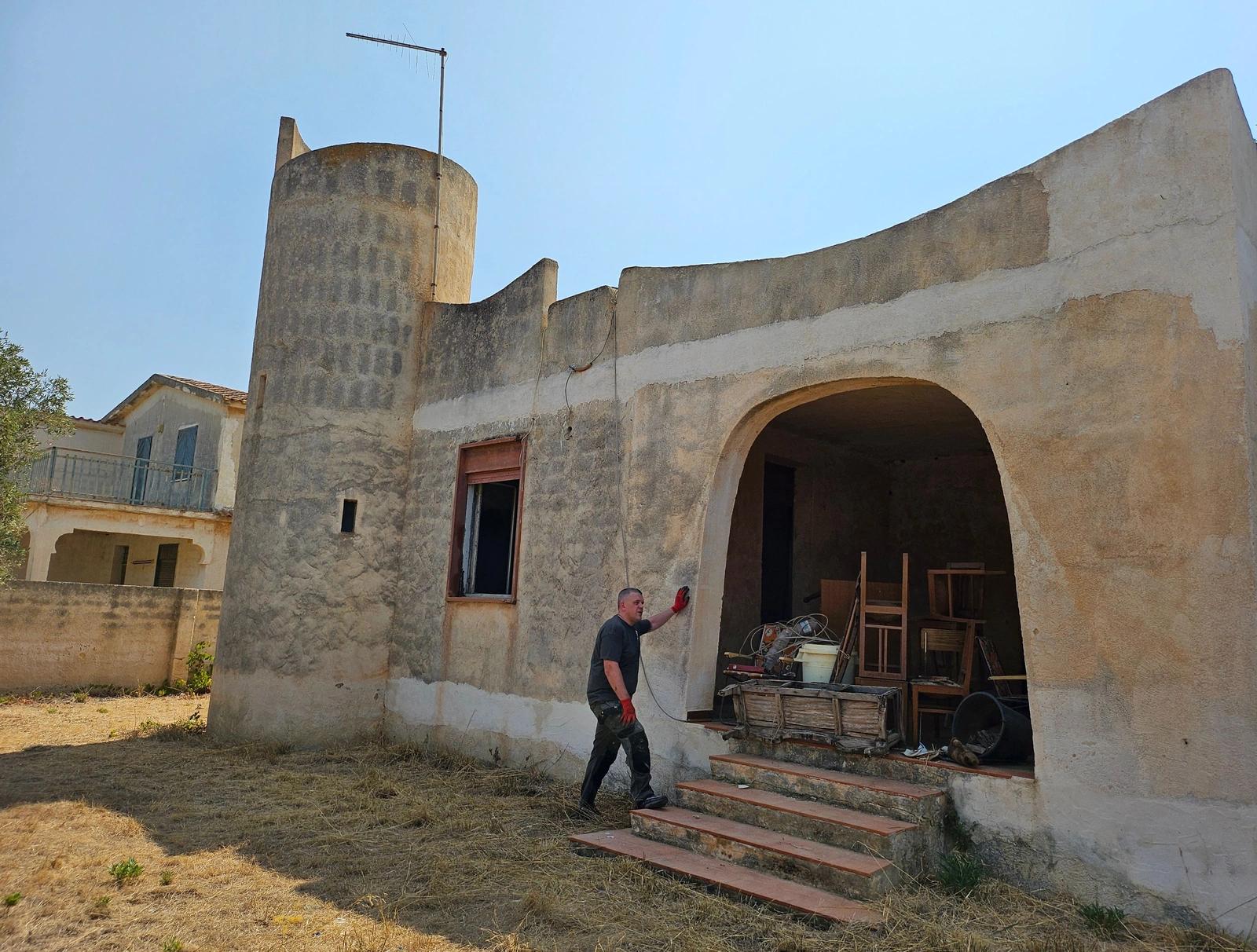
I have not long been back in Sicily, after a few weeks in the UK spending time with family. The next big job here is getting the whole villa ready for plaster, which we are not far off. Before plastering, all the windows and doors have to come out, and the openings have to be boarded back up so the house is weatherproof and rodent proof. As soon as that is done, the place is pretty much ready for plaster, and it is going to be a big step forward. I set out this plan in episode 53.
I have brought a bag of goodies with me: hinges, drill bits, rim locks, padlocks and screws, all useful for boarding up the windows and doors. Getting through security was interesting. This time I had to take an interconnecting flight, Manchester to Bologna and then Bologna to Trapani, and both times I got stopped with this bag. Everyone else's luggage is full of sun cream and swimming shorts, and mine is full of drill bits and locks.
It makes sense to bring this stuff from the UK. I have most of it there already, so there is no point buying it twice, and there is quite a lot you cannot get over here, or that is different. Butt hinges, for example, I just cannot find here. My timeline of year one shows how the first twelve months have gone.
Taking out the first metal window
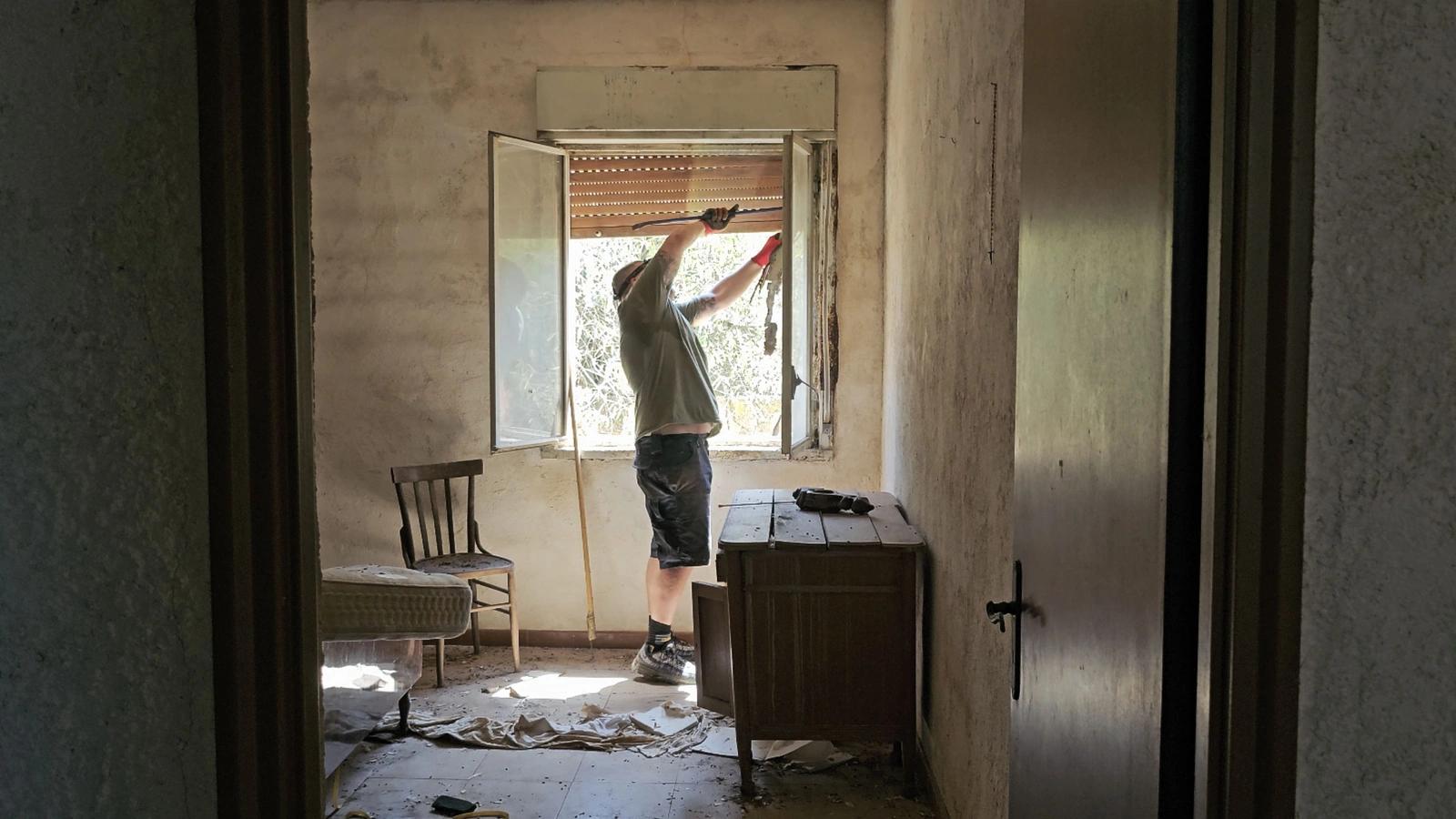
The first window to go is in the boys' bedroom. The original metal window and its roller shutter casing are set into concrete, with no visible fixings to go on. I cut through the fixing lugs with the angle grinder, then chip away the concrete, rusted steel and crumbling plaster until I can lever the whole frame loose with a crowbar and drop it outside into the courtyard.
With a lump hammer and cold chisel I clean the old mortar from around the opening. This is the perfect example of how one job always becomes two. The window is out, and now the lintel above it needs replacing too. That job follows in episode 59 and episode 60.
Mending the wheelbarrow and clearing rubble
On the porch, I fix the wheelbarrow, levering a new tyre onto the wheel and tightening the rim bolts. Then it is round to the back of the house, where the old metal frame is stacked against the boundary wall and the fallen masonry is shovelled up. The rubble does not go to waste. It is reused as backfill, and later in the week it goes into an open drainage trench in the yard. Along the garden wall, the cats and kittens laze in the sun.
Boarding up the opening on my own
I am boarding up on my own, so I build the frame first:
- Measure the opening and cut timber studs to size on the mitre saw.
- Screw the studs together on the floor into a frame that matches a sheet of OSB.
- Fix the frame around the outside of the opening with long masonry screws and the impact driver.
- Lift the full OSB sheet into place and screw it to the frame.
The frames are temporary. They keep out the weather and the rodents while the plasterers work, and come off when the new windows go in. My practical guide to renovating in Sicily explains why this order of jobs matters.
Improving the water collection
Outside the bathroom, I lift the old bath off its blocks and move it, along with some stone pavers, away from the wall to make room for the next job, and the water collection setup is improved while I am at it. The overflow I made from an old door and bath is in episode 54. Inside, there is time to play with the kitten with a piece of string on a stick, while an adult cat looks on.
Cutting a bigger bathroom window
The bathroom had a small metal louvre window. I want a bigger opening for more light and ventilation. I lay down a dust sheet, cut the old frame out with the grinder, then stitch drill the outline of the new opening with the SDS. The grinder, the SDS with its chisel bit and the Stihl saw cut the rest, and I break away the stone, working from the ladder outside and from inside.
The rubble is wheeled straight over to fill the drainage trench. Once the top section is knocked out, the opening is complete, and it gets its own timber frame and OSB board. Up the ladder, I fill every gap around the edges and the joint between the panels with expanding foam to seal it against weather and wildlife. My article on what I wish I had known before buying covers surprises like the lintels.
Frequently asked questions
Why remove windows before plastering?
At my villa all the windows and doors came out before plastering, and the openings were boarded up so the house stayed weatherproof and rodent proof.
How do you board up a window opening on your own?
I built a timber frame to match a sheet of OSB, screwed the frame around the opening with masonry screws, lifted the board on and sealed the gaps with foam.
Can you take tools on a flight to Sicily?
I brought hinges, locks, screws and drill bits in my luggage via Bologna to Trapani. I got stopped at security with the bag both times, on each flight.
Why make a bathroom window bigger?
I cut a larger opening in my bathroom wall in place of the small louvre window, to let in more light and give the room better ventilation.
More episodes on the same job: Windows and doors

 The weekly YouTube series