

Can Canadians still get Italian citizenship by descent?
Yes, but far fewer than before. Since Decree-Law 36/2025, confirmed by Law 74/2025, someone born abroad who also holds another citizenship, Canadian for example, is only Italian by descent in these cases, as the Toronto and Montreal consulates set them out:
- A parent or grandparent held only Italian citizenship on the day you were born, or on the day they died.
- An Italian parent lived in Italy for at least two years in a row after becoming Italian and before you were born.
- You applied, or had an appointment booked, by 23:59 Rome time on 27 March 2025. Those cases are judged under the old rules.
In practice, the question for most Canadian families is when the Italian grandparent became a Canadian citizen. If your grandfather naturalised in Canada before you were born, the grandparent route is closed. If he stayed a permanent resident and never took Canadian citizenship, it may still be open. The Toronto consulate adds a point that catches people out: a grandparent who held only Italian citizenship is not enough on its own, because the line has to run through your parent too, so your parent must also have been Italian when you were born. The consulates also note that an Italian mother could only pass citizenship to children born from 1 January 1948.
A great-grandparent is no longer enough, whatever the records show. The full rules, the exceptions for children and the other routes to living in Italy are in my main guide to Italian citizenship by descent. This page covers the Canadian side: which office, which papers and where to get them.
Canadian Italian dual citizenship
Canada allows you to hold more than one citizenship and keep your Canadian one, and Italian law lets you keep another citizenship when you are Italian. The Government of Canada does warn that, as a dual citizen, you need a valid Canadian passport to fly back to Canada, and that the other country may treat you as its own citizen while you are there.
Which Italian consulate covers your province
You apply to the office for the place you live, not where your family came from. Italy has three consulates general in Canada and a consular section at the embassy in Ottawa:
| Office | Covers |
|---|---|
| Consulate General in Toronto | Ontario, except the Ottawa area; Manitoba; the Northwest Territories |
| Embassy in Ottawa (consular section) | The City of Ottawa, the Outaouais region of Quebec, and the counties of Carleton, Dundas, Glengarry, Grenville, Prescott, Russell and Stormont |
| Consulate General in Montreal | Quebec except the Outaouais; New Brunswick, Nova Scotia, Prince Edward Island, Newfoundland and Labrador; Nunavut |
| Consulate General in Vancouver | British Columbia, Alberta, Saskatchewan and Yukon |
Toronto and Vancouver accept applications from descendants born in Canada who live in their district, and from those born elsewhere who live there with a valid Canadian permanent resident card. Montreal accepts only people legally and permanently resident in its district. Each adult in a family applies separately, with their own appointment.
What documents you need, and where to get each one in Canada
The consulates' lists differ in detail, so work from your own office's checklist. The core is the same everywhere:
- The application form, your passport and proof that you live in the district, such as a driver's licence or utility bill. These need no apostille or translation.
- The Italian ancestor's birth record, as an extract from the comune where they were born. If you still need to find the town, my guide to tracing your Sicilian ancestry covers the archives and how to write to the comune.
- Birth, marriage and death certificates for every generation from the Italian ancestor down to you. Canadian ones must be the long form, in the "Certified Copy of Registration" format. Toronto and Vancouver both say the wallet-size certificate is not accepted. They come from the vital statistics office of the province where the event happened, such as ServiceOntario, or the Directeur de l'état civil in Quebec.
- Proof of the ancestor's citizenship. If they became Canadian, a citizenship certificate showing the exact date; Montreal says the wallet card is not accepted. If they never did, Montreal asks for their permanent resident card. Either way, the consulates point to the IRCC Search of Citizenship Records or an Access to Information request, made under both maiden and married names for women.
- Your own marriage or divorce papers, if they apply.
Fix any difference in names, dates or places before you go further. Toronto and Vancouver both say errors must be corrected before the documents are apostilled and translated, and Montreal says discrepancies are not accepted. The originals are kept by the consulate.
The IRCC search and the archives
IRCC's Search of Citizenship Records confirms a person's citizenship and naturalisation details and costs $75. If the person has died, the letter it sends does not expire. Library and Archives Canada says most citizenship and naturalisation records from 1854 to the present are held by IRCC, and that its own lists of names and certificate numbers from 1915 to 1951, taken from the Canada Gazette and the Secretary of State's reports, are online and searchable by name. Finding a certificate number there first makes the IRCC request easier. Canadian citizenship itself began on 1 January 1947.
Apostille and translation in Canada
Canada now uses the apostille, so Canadian certificates go to the authority for the province that issued them, then to a translator:
| Documents from | Apostille issued by |
|---|---|
| Ontario | Ontario Ministry of Public and Business Service Delivery |
| Quebec | Ministère de la Justice du Québec |
| British Columbia | BC Ministry of Attorney General |
| Alberta | Alberta Ministry of Justice |
| Saskatchewan | Saskatchewan Ministry of Justice and Attorney General |
| Manitoba, the Atlantic provinces and the three territories | Global Affairs Canada |
Global Affairs Canada says it charges no fee; the provincial services set their own fees and times. After the apostille, everything except your ID and the form is translated into Italian. Toronto accepts translations by translators whose signature it holds on file, and otherwise asks for a notarised, apostilled translation. Montreal asks for one of its own official translators. Check your consulate's page before you pay anyone.
How to book: Prenot@mi, the fee and waiting times
Appointments are booked on Prenot@mi, the Italian consulates' online booking system, by each applicant in person, not through an agency. Book only when every document is ready: Toronto says appointments are for handing in a complete file, not for advice, and that you must confirm the appointment through the email link or lose it.
- The fee is €600 for each adult, paid at the counter in Canadian dollars at the rate in the consular fee table, which changes every quarter. Toronto takes Canadian debit cards only, Vancouver cash or a money order, Montreal cash. It is not refunded, whatever the outcome.
- Slots are scarce. Toronto released 180 appointments for October to December 2026 on 21 September 2026 and asked people to check its site in December 2026 for the 2027 calendar. Montreal caps adult applications each year until the end of 2028 at the number of adult recognitions it completed in 2025.
- A law passed in January 2026 (Law 11/2026) moves adult applications from people living abroad to a dedicated office at the Foreign Ministry in Rome from 1 January 2029. Until then, consulates may take only a limited number.
- The published maximum time to decide is 24 months in Toronto for older files and 36 months for applications made from 2026, and 36 months in Vancouver and Montreal. None of them publishes how long you wait for an appointment.
Toronto also says it is reviewing, in date order, files that were held up by the so-called minor issue, following a 2026 ruling of Italy's Supreme Court of Cassation, and that staff may not answer questions about individual cases while it does so.
Applying in Italy instead
If you move to Sicily first, the application goes to the comune where you are registered as resident rather than to a consulate, and the same 2025 rules apply. As a Canadian you first need the right to live in Italy, which usually means a long-stay visa and a permesso di soggiorno, and then registration at the anagrafe. My guide to registering residency in Sicily explains that step, and moving to Sicily from Canada covers the visas. Ask the comune about its own fee and list before you book flights.
What Italian citizenship lets you do in Sicily
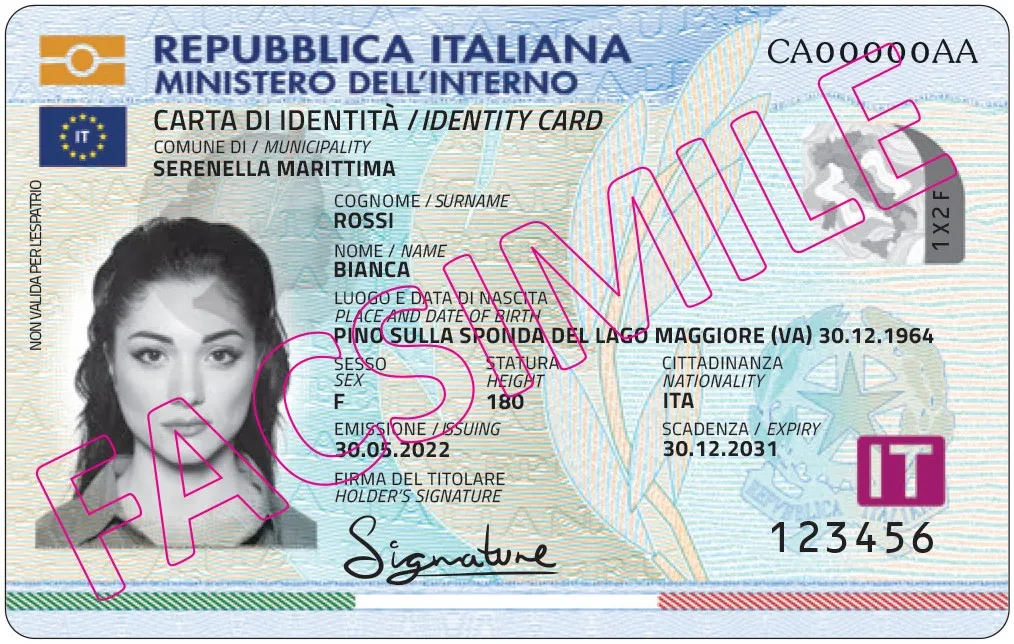
Once you are recognised, your birth is registered in Italy and you can live in Sicily as any Italian does: no visa, no permesso di soggiorno, just a declaration of residence at the comune. As an EU citizen you also have the right to live, work, study or retire in any other EU country. If you stay in Canada, you are registered on AIRE, the register of Italians living abroad; Montreal includes the AIRE form in its application list.
That is the part that changes daily life here. Buying a house is open to Canadians either way, as I explain in buying property in Italy as a Canadian, but living here without a visa or a residence permit, and working without one, come with the passport.
Frequently asked questions
How do I apply for Italian citizenship in Canada?
Check first that you still qualify under the 2025 rules. Then gather the Italian ancestor's birth extract, long-form Canadian certificates for each generation and IRCC records of the ancestor's citizenship, have the Canadian documents apostilled and translated into Italian, and book an appointment on Prenot@mi with the Italian consulate for your province: Toronto, Montreal, Vancouver or the embassy in Ottawa. You hand in the file in person and pay €600 in Canadian dollars.
Can I get Italian citizenship through my grandparents in Canada?
Only if that grandparent still held only Italian citizenship when you were born (or when they died), and your parent was Italian too. If your grandparent became a Canadian citizen before you were born, the grandparent route is closed under the 2025 law, unless you applied or booked by 27 March 2025.
Does Canada allow dual citizenship with Italy?
Yes. Canada allows you to hold more than one citizenship and keep your Canadian citizenship, and Italy lets its citizens hold another nationality. You need a valid Canadian passport to fly back to Canada.
Which Italian consulate do I apply to in Canada?
The one for where you live. Toronto covers Ontario outside the Ottawa area, Manitoba and the Northwest Territories; the embassy in Ottawa covers the Ottawa area and the Outaouais; Montreal covers the rest of Quebec, the Atlantic provinces and Nunavut; Vancouver covers British Columbia, Alberta, Saskatchewan and Yukon.
How long does Italian citizenship by descent take in Canada?
The consulates publish a maximum of 36 months to decide for applications made from 2026 (Toronto gives 24 months for older files). Getting an appointment can take longer than that, because slots are released in small batches and are capped until the end of 2028.
How much does Italian citizenship cost in Canada?
The consulate fee is €600 for each adult, paid in Canadian dollars at the consulate's quarterly rate and not refunded. On top come certificates, the IRCC search ($75), apostilles where a province charges for them, and translations.
How do I prove my grandfather never became a Canadian citizen?
Ask IRCC for a Search of Citizenship Records, or make an Access to Information request, in his name. If he never naturalised, the consulates also accept his permanent resident card. For women, search under both maiden and married names.
Do Canadian documents need an apostille for Italian citizenship?
Yes. Canadian birth, marriage and death certificates and the IRCC records must be apostilled by the authority for the province that issued them (Global Affairs Canada for Manitoba, the Atlantic provinces and the territories), then translated into Italian.
Can I apply for Italian citizenship in Italy instead of Canada?
Yes, if you live legally in Italy and are registered as resident with a comune; you then apply to that comune instead of a consulate. The same 2025 rules apply, and as a Canadian you need a visa and residence permit to live there first.
Sources and small print
- Consulate General of Italy in Toronto: citizenship by descent, citizenship, citizenship appointments, 10 September 2026 and the consular network in Canada
- Consulate General of Italy in Montreal: citizenship by lineage (ius sanguinis)
- Consulate General of Italy in Vancouver: citizenship, adult applicants
- Consulate General of Italy in Sydney: Law 11/2026 and the Rome office from 2029
- Italian Ministry of Foreign Affairs: citizenship; Italian Ministry of the Interior: Law 91/1992 (article 11, keeping another citizenship; in Italian)
- Immigration, Refugees and Citizenship Canada: Search of Citizenship Records
- Library and Archives Canada: citizenship and naturalization records
- Global Affairs Canada: authenticate your documents, and dual citizens
- European Union, Your Europe: residence rights
This guide is general information, not legal advice. Citizenship cases turn on documents and dates, and consulates change their lists and booking rules, so check your own case with the consulate that covers where you live, or a lawyer who specialises in Italian citizenship.
Credits
Photo: Sander Sammy, Unsplash Licence, via Unsplash.
Photo: Ministero dell'Interno / IPZS, CC BY 4.0, via Wikimedia Commons.
 The weekly YouTube series