
In this episode
- A Ryanair flight from Manchester Airport to Trapani, landing in 38°C heat
- Collecting the keys and opening the gates to the abandoned villa for the first time
- A full walk through the lounge, the round tower room, the kitchen, the bathroom and both bedrooms
- The overgrown walled garden, its olive trees and a flock of sheep for neighbours
- Cafes, bakeries and old churches in the local town
Leaving grey skies behind
This is where it all starts. I bought an abandoned villa in Sicily, and in this first episode I fly out to see exactly what I have taken on. The journey begins at Manchester Airport on a Ryanair flight bound for Trapani, on the western tip of the island. The caption on screen as we climb through the clouds says it all: goodbye gloomy skies, onwards to sunny Sicily.
We touch down at Trapani in 38°C heat, and from the airport it is straight to the villa. If you are thinking of making a similar move, my guide to what I wish I had known before buying is a good place to start, and the Italy move planner sets out the steps in order.
Keys in hand, the villa is officially mine
At the front of the property I unlock the metal double gates and walk up the path to the house. The keys are mine and the villa is officially mine. The caption puts it plainly: now to see what I have signed up for.
The first space is the covered veranda at the front, with its arched openings looking out over a dry garden and olive trees. The floor is old weathered tiles and the walls are bare plaster, but even here you can see why the place caught my eye. You can read how the purchase itself went, step by step, in the legal process of buying an abandoned house in Sicily, and what I actually paid in episode 9.
A first look inside the abandoned villa
Inside, the main living and dining room still has a large table under a floral tablecloth, a mix of old chairs and stained, discoloured plaster walls. Nobody has lived here for a very long time, and it shows.
The room I was most curious about is the circular tower. Its base room is full of discarded shelves, old shoes and bottles, with a television aerial fixed to the curved wall, but look up and the ceiling rises into a high cone with small windows at the top. It is one of the features that makes this villa different, and it will play a big part in the plans to come.
The kitchen is a proper reality check. The wall cupboards are damaged and peeling, the wall tiles are a retro yellow and there is an old sink with a single tap, a cloth covered table and a small fridge. As the caption says, the work ahead is no small task. Along the corridor, with its arched doorways, the bathroom has yellow floral wall tiles, a bath, a toilet and a bidet, an old rusted water heater high on the wall and a window with broken plaster around it.
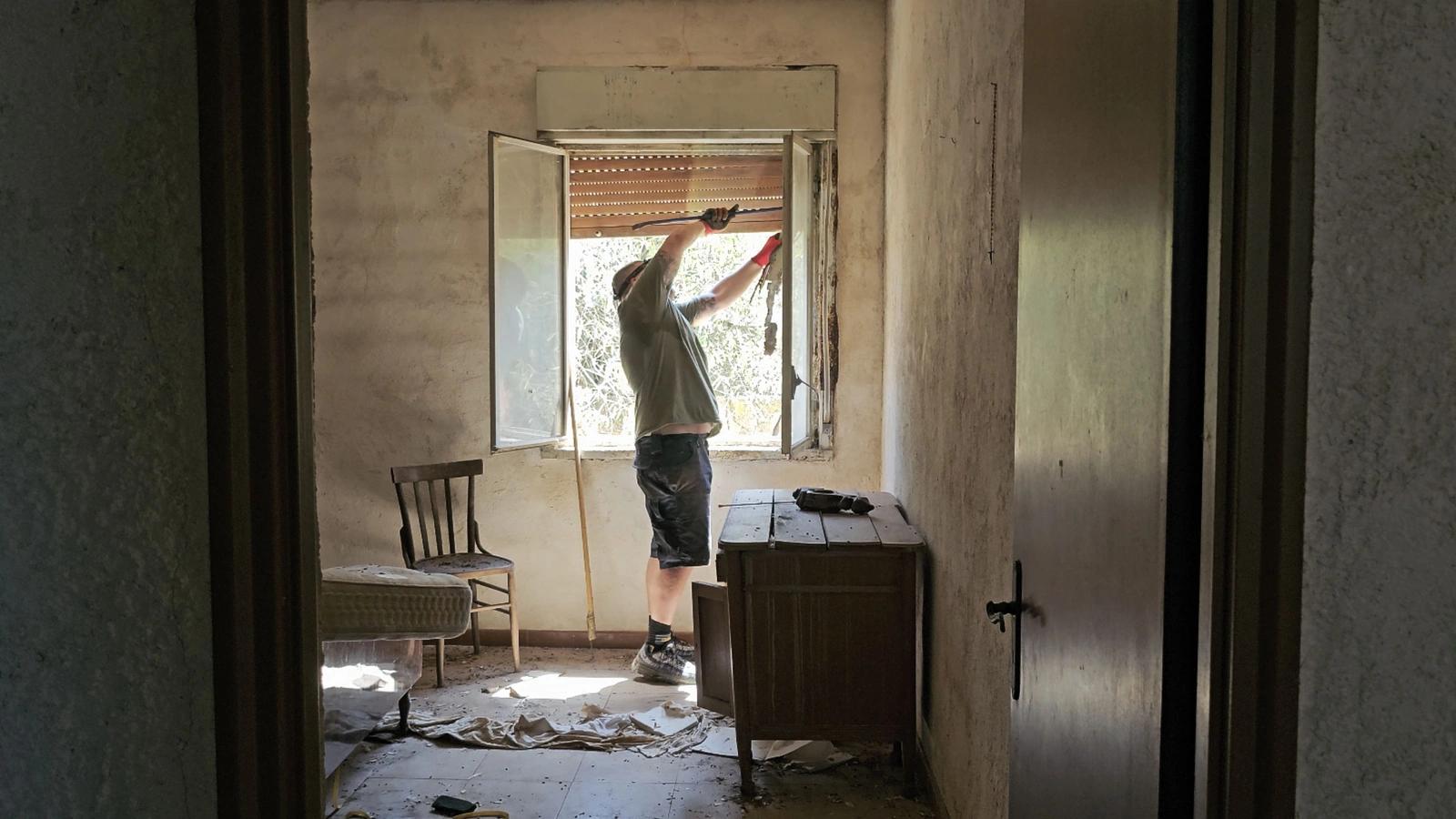
The first bedroom has rough whitewashed block walls and a dusty tiled floor scattered with old bowls, a jar, a pot and three chairs. The second bedroom is darker, with an old mattress propped on a bed frame, a chest of drawers, a shuttered window and peeling walls. None of it is pretty, but the structure is what matters, and what I was looking at was a solid building that had simply been left alone for years.
The overgrown garden and the new neighbours
Outside, the garden is walled all the way round and completely overgrown. There are mature olive trees, pine trees, prickly pear, an old outbuilding and the cover of a water well, with the round stone tower rising up at the side of the house. Even in this state, the garden has a calm feel to it, and it is a space with huge potential.
Then the neighbours arrive: a large flock of sheep walking past on the dirt lane in front of the house, kicking up dust as they go. The caption says the new neighbours were acting sheepish. Beyond the wall, the countryside is red earth and olive groves under a clear blue sky. If you want to know what rural life here is really like, I have written about living in rural Sicily.
Exploring the local area
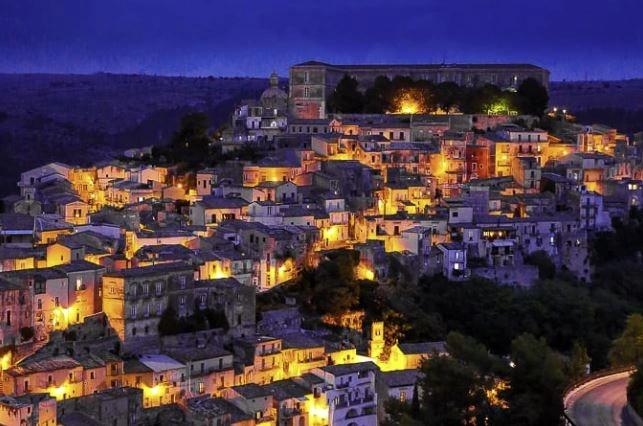
To finish, I head into town. There is an old stone arch with a fountain in front of it, a long public staircase decorated with hand painted Sicilian ceramic tiles showing sea creatures, owls and figures, and a bakery counter full of croissants, sugared doughnuts and pistachio buns. I walk through narrow historic streets with oversized fabric lampshades hanging overhead, and end inside a large church with painted vaulted ceilings, gold and white marble columns and wooden pews.
My plan from day one is to renovate the villa myself and make it self sufficient, with solar power and its own water. My guide to buying, renovating and living off grid in Sicily explains the thinking. The real work begins in episode 2, securing the villa with no electricity at all.
Frequently asked questions
Which airport do you fly into for Operation Sicily?
In episode 1 I fly with Ryanair from Manchester Airport to Trapani, the airport on the western tip of Sicily, and drive from there to the villa.
What was inside the abandoned villa when you got the keys?
Old furniture, a dining table and chairs, shelves, shoes and bottles in the tower room, a dated kitchen with damaged cupboards, a bathroom with yellow floral tiles and two dusty bedrooms, one with an old mattress.
Does the villa have a garden?
Yes. It has a fully walled garden with mature olive trees, pine trees, prickly pear, an old outbuilding and a water well, all completely overgrown when I bought it.
What are your plans for the abandoned villa?
To renovate it myself, room by room, and make it self sufficient with solar power and its own off grid water supply, filming every week on YouTube.
More episodes on the same job: Buying the villa
 The weekly YouTube series